Dušan Otašević
Bio
Dušan Otašević
(1940, Belgrade / YU (RS) – )
Dušan Otašević completed his studies at the Academy of Fine Arts in Belgrade and received his diploma in 1966. His first exhibition was organized in 1965 at the Atelje 212 in Belgrade.
Initially, he was concerned primarily with the “new figural” style, but he soon turned to pop art. This was partly due to the circumstances made possible by the Yugoslavian model that evolved in the 1950s, namely the system that was based on self-government and became known as “independent socialism”, a system which provided a certain political and cultural independence. Yugoslavian artists in the 1950s and 1960s were able to move within less confined borders compared with countries strictly understood as belonging to the Soviet Blok and thus were able to join current trends, such as pop art.
The main points of interest for Otašević are the objects of everyday life (such as matches and cigarettes). His works are permeated with irony, and his reflections on kitsch, political manipulation and the dominance of consumer society. In his art he creates a unique, fully reduced visual language with easily identified marks. He is regarded as one of the most authentic pop artists. He currently works and resides in Belgrade.
+
Marlboro Man
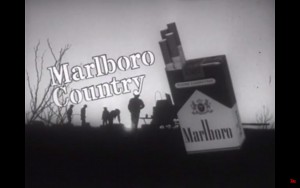 Philip Morris, a tobacco factory owner form London, established his factory in America in 1902, in order to introduce his cigarettes on the American market, including Marlboro, one of the most popular cigarette brands today.
In the 60s, his American advertisement agency, Leo Burnett Worldwide came up with the branding ‘Marlboro Country’ and ‘Marlboro Man’. The emblematic figure proved to be highly successful, the company saw a rapid increase in sales right after the campaign launch. The iconic advertisement with the slogan ‘Come To Where The Flavor Is‘ was launched in 1966, in the same year when the ‘smoking is harmful for your health’ message on cigarette packets was introduced in the US.
https://www.youtube.com/watch?v=yQmpqvoEpws
World News
1966 in the world
- The Great Proletarian Cultural Revolution is announced in China.
- Indira Gandhi becomes the prime minister of India.
- In June, in the municipal canton of Basel women are granted the right to vote. In November, men vote against women’s suffrage in Zurich. The National Organization for Women is formed.
- In the United States the Black Panther Party is founded.
- In the United States health warnings begin to be required on cigarette packs.
- Although it had already been part of women’s fashion, the miniskirt associated with Mary Quant becomes popular in 1966.
- The Luna-9 Soviet space probe lands on the surface of the moon. The Americans launch the Lunar Orbiter 1 into space.
- Barbados, Lesotho and Botswana obtain their independence from Great Britain.
- The Vatican rules that members of the Catholic church married to members of other religions will not be excommunicated.
Art Life
Events in the art world in 1966
- As the leading figure of Fluxus George Maciunas establishes Fluxus West under the direction of Ken Friedman, while Milan Knizak takes the lead of Fluxus East. Kaprow’s book Assemblage, Environments, and Happenings is published.
- Ernst Museum, Budapest / Exhibition entitled “Studio ‘66”. After sharp debate, representatives of the new movements receive a separate room: Sándor Altorjai, Imre Bak, András Baranyay, László Gyémánt, Gábor Karátson, Ilona Keserü, Ferenc Kóka, György Korga, László Lakner, János Major, Sándor Molnár, Ludmil Siskov.
- The cellar of István Szenes, Hegyalja St. 20/b, Budapest: the first happening in Hungary, “The Lunch (In Memory of Batu Khan)”, participants: Gábor Altorjay, Tamás Szentjóby.
- Alberto Giacometti, André Breton and Walt Disney die.
Design, Lifestyle

„Souper Dress” paper dress, USA, ca. 1966
The ‘Souper’ dress from the collection of Metropolitan Museum of Art is made of fleece, a flexible and strong fabric made of wall paper cellulose and poliester. The printed pattern shows ‘Campbell’s Soup’ tin cans, decorated with black lining. The dress was inspired by Campbell’s famous soup can image. The choice of fabric evokes the pop culture’s obsession with throw-away objects – the dress is from the same year as the work of Otašević.
Film
1966 and film
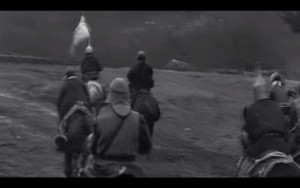
- Andrei Tarkovsky: Andrei Rublev
The original trailer for the film:
https://www.youtube.com/watch?v=CbguowlkZ4g
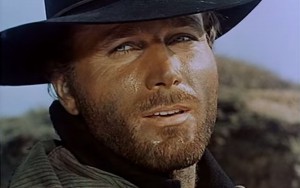
- Sergio Corbucci: Django
The original trailer for the film:
https://www.youtube.com/watch?v=w8Ge2hmSTbo
- Zoltán Várkonyi: Egy magyar nábob [A Hungarian Nabob]
An excerpt from the film:
https://www.youtube.com/watch?v=Kyty7RoGro0

Music
1966 and music
- The first Hungarian dance song festival (János Vámosi, Márta Záray, János Koós, Lehel Németh, Kati Kovács, Zsuzsa Koncz, János Bródy, Levente Szörényi)
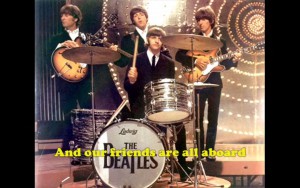
- Beatles: Yellow Submarine
https://www.youtube.com/watch?v=T464iZu85Js
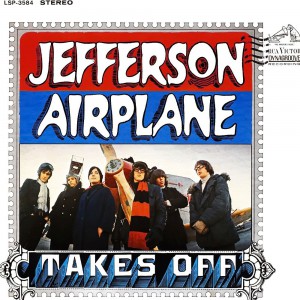
- Jefferson Airplane : Jefferson Airplane Takes Off
https://www.youtube.com/watch?v=MUbx3RhcyLs