Juraj Melis
Bio
Juraj Melis
(1942, Nové Zámky / SK – )
Juraj Melis is a leading figure of contemporary Slovakian art. He received his diploma from the Academy of Fine Arts in Bratislava, where he later became a professor of sculpture. Melis became known as an artist who rejected aesthetization and professed a “plebeian” approach to sculpture. He created his works out of everyday items of trash and objects with which he expressed rebellion, humour and irony, offering testament to his sense of morality and making him one of the most important representatives of the region’s alternative endeavours.
Melis activity and work provide a kind of bridge between Hungary and Slovakia. One of the forums of non-official collaborations was Imre Makovecz’s application of 1972 entitled Minimal Space, for which Juraj Mellis sent his colour drawing entitled 4 p, which with its minimal living space (breeding, work, eating, digestion) can be interpreted as a response to the threefold slogan of the labour movements – 8 hours of work, eight hours of sleep, eight hours of entertainment. An exhibition focusing on his work entitled Sculptures, Drawings and Collages was organized at the Kassák Museum in 2005.
Source: Prae online
+
The Ties between Juraj Meliš and Lajos Kassák
In 2005, the Kassák Museum in Budapest organized an exhibition of works by Juraj Meliš entitled Sculptures, Drawings, Collages. Soon after the exhibition, Contact Zone – Juraj Meliš and Slovakian-Hungarian Connections, which was a tribute to the 70th birthday of the avant-garde artist and the 125th anniversary of the birth of writer, publicist, and artist Lajos Kassák, was opened, also at the Kassák Museum.
Juraj Meliš and Lajos Kassák (1887–1967) were both born in the town of Nové Zámky, albeit about half a century apart. Meliš played a significant role in the reception and recognition of Kassák’s art in Slovakia, and he did so from the angle of living art and living tradition. The work of Kassák, who had been the leader of the Hungarian avant-garde, was discovered by the young Slovakian generation of artists in the 1970s and 1980s. Meliš was the motivator and organizer of the initiative, one of the achievements of which was the creation by 48 Czechoslovak artists of works of art in honour of the centenary of Kassák’s birth in 1987. It was also thanks to Meliš that an unparalleled ensemble of works was acquired by the Kassák Museum.
Sources:
Prae online, Kassák Museum online
World News
1970 In the World
• The exonomic reform package referred to as “New Economic Mechanism” starts in Hungary.
• Moammer Kadhafi forms government in Lybia.
• The international treaty prohibiting the expansion of nuclear weapons is ratified.
• The Deák Square – Fehér út section of the 2nd metro line is opened in Budapest.
• Start of the civil war in Cambodia, which leads to the terror of the Red Khmers in 1975.
• Establishing the bands Queen and ABBA. The Beatles break up.
• Launch of the final version of the data storage device, the “floppy disc”. It is available on the market from 1971.
• The world population reaches 3,692,492,000.
• Death of Charles de Gaulle, Jimmy Hendrix and Janis Joplin.
Art Life
Art Events from 1970
- John Lennon, who studied at the Liverpool Art Institute between 1957 and 1960, exhibits his drawings in the London Arts Gallery, under the title ”Bag One”: Scotland Yard officers confiscate half of the works due to their erotic subject matter.
- The first concept art exhibition, Conceptual Art and Conceptual Aspects opens at the New York Cultural Center, organised by Donald Karshan. Among the exhibitiors there are: Joseph Kosuth, Daniel Buren, Bernar Venet, Denis Oppenheim and On Kawara.
- György Galántai opens his workshop called ”Chapel Exhibition”, which function as a summer showroom for underground art until 1973. (Artpool)
- Publication of the important law in the period, titled: “Operative tasks against enemy activity within the cultural sector.” (Artpool)
- Death of Mark Rothko.
Design, Lifestyle
Great Big Mirror Dome
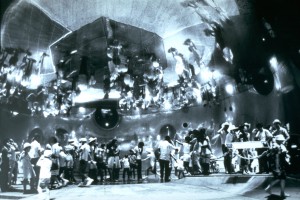 “The Pepsi Pavilion, created for the Expo ’70 in Osaka, Japan, contained a fully immersive spherical mirror that produced real-image, three-dimensional reflections of visitors. The culminating project carried out by E.A.T. (Experiments in Art & Technology) was an extraordinary effort involving over 75 artists and engineers – a landmark public sculpture and performance installation commissioned by Pepsi-Cola. The artists and engineers who created the Pavilion synthesized the tendencies of the 1960s, bringing together the currents of social interaction, collaboration, electronic media, Happenings and performance art, immersive environments, and mind-altering ”realities” in this transformative ‘theater of the future’.”
“Billy Klüver’s (director of E.A.T.) ambition was to create a laboratory environment, encouraging ”live programming” that offered opportunity for experimentation, rather than resort to fixed or ”dead programming” as he called it, typical of most exposition pavilions. Secondly, the Pavilion evoked and celebrated aspirations for heightened, non-hierarchical social dynamics built on the aesthetics of agency and transformation brought about through the collective participation of the audience, the artists, and the engineers. The Pavilion gave visitors the liberty of shaping their own reality from the materials, processes, and structures set in motion by its creators.”
Eric Saarinen, designer of the New York JFK international airport, created a short-film documenting the research period for the dome.
Source:
http://zakros.com/writing/pepsi-pavilion/ (the short-film can be seen there)
text taken from: Future Cinema: The Cinematic Imaginary after Film, ed.: Jeffrey Shaw and Peter Weibel, The MIT Press, Cambridge Massachusetts
Film
1970 and film
- Martina Hollého: Medená veza
https://www.youtube.com/watch?v=yier_8u8Xy8
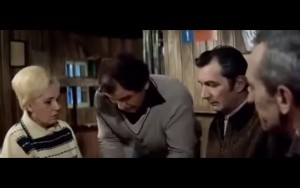
- Juraj Jakubisko: Dovidenia v pekle, priatelia
https://www.youtube.com/watch?v=1yrFBlA3ZF4
- Michael Wadleigh: Woodstock

Music
1970 and music
- Sarolta Zalatnay: Nem vagyok én apáca
(https://www.youtube.com/watch?v=RQ1Sf1s0djE)
- The Beatles break up
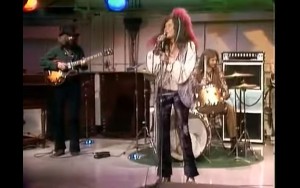
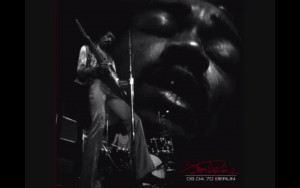
- Janis Joplin and Jimi Hendrix died
(https://www.youtube.com/watch?v=xGYcWmwvZxQ)
(https://www.youtube.com/watch?v=0RgltNVcBs0)