Neša Paripović
Bio
Neša Paripović
(1942, Belgrade / YU (RS) – )
Neša Paripović is one of the leading figures of Eastern European and in particular Serbian Conceptual art. His most active period was in the 1970s. Between 1971 and 1976, he was married to Marina Abramović. The main areas of his interest include photography, film, performance and Conceptual art. In his art, he deliberately seeks human forms and simple gestures. According to his ars poetica, everything made by an artist should be considered art. One of his famous performances, during which he gazed at a plain sheet of paper for a long period of time, was conceived in these terms. He explored the relationship between artist and artwork, calling his living models – with whom he came into physical contact during the performances – sculptures. One of the emblematic works at the exhibition entitled Promises of the Past, which was organized in 2010 at the Centre Pompidou and surveyed the art of Post-Soviet Eastern European countries, was a frame from his film N.P. 1977: Paripović walks across Belgrade in a straight line, regardless of the obstacles he encounters, whether they be buildings or roads.
+
The work Ava by Neša Paripović was created in 1971. The title can be interpreted as a play on words, as it has a multifold meaning. Firstly, Ava can refer to the ‘avantgarde’ as a kind of abbreviation. Secondly, in some dialects of the Russian language, the word „ава” means ‘Earth mother’ / ‘mother’. Furthermore, Ava is a woman’s name that originates in the Middle Ages. One of the most famous women in history wiht the name Ava was Ava Gardner actress.
World News
1971 in the world
- Cigarette advertisements are banned from the US television.
- The crew of Apollo 14 lands on the Moon
- Mátyás Rákosi dies.
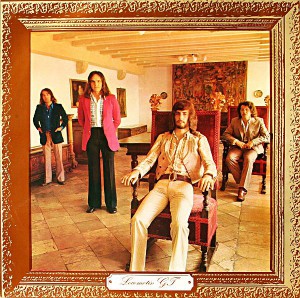
- The Hungarian band LGT is established
- End of the Prague Spring.
- Inauguration of Central Europe’s biggest pioneer camp by János Kádár
- The death of Jim Morrison further feeds the legend of ’27’
- Dénes Gábor wins the Nobel Prize in physics for the invention of holographic image recording.
- Meddle by Pink Floyd and Imagine by John Lennon are published. The latter became the anthem of hippies.
- Death of Coco Chanel.
Art Life
1971 in the Art World
- Alexis Krasilovsky’s film “End of the Art World” is out: the 35 minutes color film explores the most famous 1960’s artists in New York City: Warhol, Rauschenberg, Johns, Lichtenstein and others on 16mm film.
- “With a quality of humor possible only with depth of understanding, Alexis Krasilovsky presents a catalogue of interviews with modern artists in which the shooting style as well as the aural material’s format rehearses the personal style, the aesthetics, and the assumption of each artist about the nature of his art.” (Artforum)
- The results of the architectural design competition for the commissioned Centre Georges Pompidou in Paris were announced – it was the first time in France that international architects could participate. From the 681 entries, the team of Italian architect Renzo Piano, British architect Richard Rogers and Italian architect Gianfranco Franchini, assisted by Ove Arup & Partners won.
Design, Lifestyle
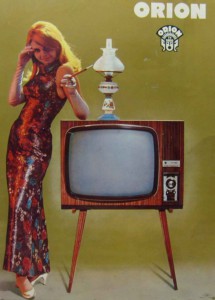
Advertisement of the Victoria Super Modern form 1971.
The predecessor of the Orion Radio and Electricity Company was founded in 1913 by János Kremeneczky Austrian
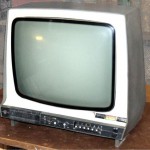
The AT 551 Venus TV set from 1971
businessman. The Hungarian Wolfram Factory changed its name to Orion Electricity in 1925, producing all their products under the brand Orion. The brand logó was designed by József Bottlik graphic designers. Due to the increasing competition in the 1930s, the factory experienced some hardships, until in 1941, it was turned into a war factory. In 1948, the factory was nationalised. The first television set was made in 1955. Until 1988, more than 3 million TV sets left the factory. In 1989, after the change -over, the company was broke up into four ltds.
The Victoria Super Modern TV set by Orion came out in 1970/71. It was advertised on a stand, surrounded by pretty women.
A very different TV set came out in the same year, as well. „László Karmazsin’s multifold talent in creating forms and painterly effects manifested itself in the field of information technology and digital electronic apparatus […] His individual, bold, yet loose forms is shown perfectly in the AT 551 Venus TV set with button-programming, plastic shell and assymetric programming panel (Orion 1971).”
Source:
Gyula Ernyey: Az ipari forma története Magyarországon, Művészettörténeti Füzetek 8., 1974
www.radiomuseum.hu
Film
1971 and film
- Ava Gardner
- Stanley Kubrick: A Clockwork Orange
https://www.youtube.com/watch?v=G7fO3bzPeBQ
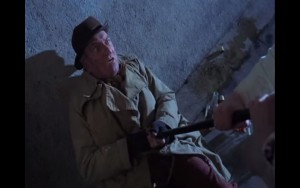
- Norman Jewison: Fiddler on the Roof
https://www.youtube.com/watch?v=N2I-uKWlj9s

Music
1971 and music
- Johnny Cash: Little Fauss and Big Halsy
https://www.youtube.com/watch?v=2Yz7XqEkPR8

- ZZ Top: ZZ Top’s First Album
https://www.youtube.com/watch?v=aOy4XdMYQb0
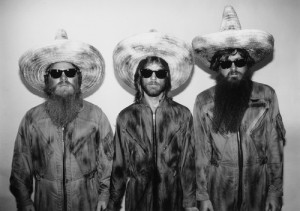
- LGT
https://www.youtube.com/watch?v=-uEa-mjTql0