Robert Rauschenberg
Bio
Robert Rauschenberg
(1925, Port Arthur / USA – 2008, Captiva Island / USA)
Milton Ernest Rauschenberg was born in a fundamentalist Christian family in Texas. Struggling with dyslexia, he began studying pharmacology at the age of 16, then went onto work as an assistant in a mental institution. At the age of 20, he decided to devote himself completely to art. During the next few years, he studied at various independent art institutions: at the Kansas City Art Institute from 1946, followed by the Parisian Académie Julian and the Black Mountain College from 1948. It was here that he met Susan Weil, who later became his wife for a short period. At the Black Mountain College, Josef Albers, one of the defining members of Bauhaus was among his professors. Albers had joined the Black Mountain College in 1933 and worked as head of the painting department until 1948. Rauschenberg was also a member of the Art Students League of New York between 1949 and 1952, where he met Cy Twombly. Rauschenberg built a close friendship with Twombly and also with Jasper Johns.
Rauschenberg had his debut solo exhibition in 1950. Just one decade later, his retrospective exhibition opened in the Jewish Museum in New York (1963). One year later, he was the first American artist to win the grand prix of the Venice Biennial. In 1955, he joined the Merce Cunninghem Dance Company, first as costume and set designer and later as artistic director. He also experimented with theatre, collaborating with John Cage among others. Rauschenberg was one of the best known figures of the post-war art scene in America. The outstanding size and
+
“Combined Painting”
Rauschenberg picked up trash and found objects that interested him on the streets of New York City and brought these back to his studio where they could become integrated into his work. He claimed he “wanted something other than what I could make myself and I wanted to use the surprise and the collectiveness and the generosity of finding surprises. And if it wasn’t a surprise at first, by the time I got through with it, it was. So the object itself was changed by its context and therefore it became a new thing.”
Rauschenberg’s idea can be understood as a sort of statement which provides the departure point for an understanding of his contributions as an artist. Technically “Combines” refers to Rauschenberg’s work from 1954 to 1962, but the artist had begun collaging newsprint and photographic materials in his work and the impetus to combine both painting materials and everyday objects such as clothing, urban debris, and taxidermied animals such as in Monogram continued throughout his artistic life.
Black Mountain College
Black Mountain College, of which Rauschenberg became a student in 1948, was an experimental school founded in the middle of the twentieth century on the principles of balancing academics, arts, and manual labor within a democratic, communal society to create “complete” people, as a heritage of Bauhaus. The environment was so conducive to interdisciplinary work and experimentation that it proved to be one of the most important settings for twentieth-century artists in their quest to revolutionize modern art.
During World War II many refugee-artists were attracted to Black Mountain College for its reputation as an experimental artistic environment. By the 1940s, the faculty included some of the greatest artists and thinkers of the time, including Josef and Anni Albers, Walter Gropius, Elaine and Willem de Kooning, John Cage, Alfred Kazin, Merce Cunningham, and Paul Goodman.
In 1952, John Cage staged his first “happening” at Black Mountain College. Fellow-classmates would continue to assist him with his performance art many years after leaving North Carolina. Robert Rauschenberg created Cage’s set, Merce Cunningham choreographed the movements, and Cage wrote the music. Through the interdisciplinary artistic practice and community values, the three artists created performance art.
By the late 1940s, William Carlos Williams and Albert Einstein joined the staff at Black Mountain College. The success of the experimental school spread throughout the country.
While Black Mountain College existed for only twenty-three years, it left an indelible mark on the American art scene. Some of the most influential American artists of the twentieth century are counted among its students. The school’s unique curriculum with an unusual communal and artistic focus was essential to the development of American arts and counterculture in the second half of the twentieth century.
Source: The Art Story online
World News
1960 in the World
- 1960 is referred to as the Year of Africa because of the seventeen African nations (e.g. Somalia, Ivory Coast, Nigeria) that gained independence.
- John F. Kennedy wins the election over Nixon and becomes the 35th President of the United States.
- For the first time, the Archbishop of Canterbury visits the Pope.
- The population of the world is 3 billion.
- France tests its first atomic bomb in the Sahara Desert of Algeria.
- The United States launches the first weather satellite.
- The Great Chilean earthquake occurs causing the most powerful earthquake on record with a magnitude of 9.5 and a tsunami.
- Penguin Books is found not guilty of obscenity, in the case of D. H. Lawrence’s novel Lady Chatterley’s Lover.
- InBuenos Aires the fugitive Nazi criminal against humanity, Adolf Eichmann is captured in order that he can be taken to Israel and put on trial.
- Death of Albert Camus and Clark Gable.
Art Life
Art events from 1960
- The artist Yves Klein and the art critic Pierre Restany establish the group Nouveaux Réalistes at a group exhibition in Milano. Members of the group wanted to return to reality instead of the poetic nature of abstract painting in the era, while trying to avoid the trap of figurativity. Art history oftern refers to Nouveau Réalisme as the French version of American pop art. The group worked together until 1970.
- Alberto Korda creates his iconic image of Che Guevara, titled „Guerrillero Heroico”.
- Death of István Szőnyi and János Mattis Teutsch.
Design, Lifestyle

Paul Evans, Cupboard, 1964 The steel cupboard is made of square shaped elements, some parts are decorated with red, purple and yellow. Media: Varnished and guilded steel, wood and slate Size: 251 x 56 x 61 cm

Paul Evans, Cupboard, 1964 The steel cupboard is made of square shaped elements, some parts are decorated with red, purple and yellow. Media: Varnished and guilded steel, wood and slate Size: 251 x 56 x 61 cm
Paul Evans American sculptor and furniture designer studied at Cranbrook Academy of Art.
Evans was one of the most influential personalities of the New Hope artistic scene in Pennsylvania. Originally, he studied to become a jewellery maker. Only later did he establish his own workshop, where he took orders, mainly for monumental furniture designs. In the 1960s, he worked for a progressive company in North Carolina, called Directional Furniture. In the 70s, however, he concentrated on his own workshop. As jewellery maker, Paul Evans mastered the secrets of steel, which he used eminently in his furniture design. His statuesque tables, doors and space dividers show perfectly how the lines between functional furniture and artwork could be blurred.
Film
1960 and film
Stanley Kubrick: Spartacus
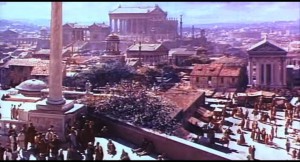
https://www.youtube.com/watch?v=HcIMY1Ah3aw
Lewis Milestone: Ocean’s Eleven
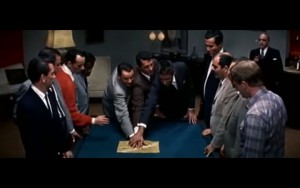
https://www.youtube.com/watch?v=ppVby97BNiw
John Sturges: The Magnificent Seven
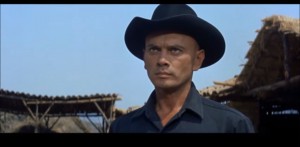
Music
1960 and music
- Édith Piaf : Non, je ne regrette rien
https://www.youtube.com/watch?v=Q3Kvu6Kgp88

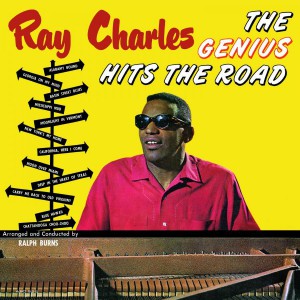
- Ray Charles: The Genius Hits the Road
https://www.youtube.com/watch?v=0T9us3bhQ4w
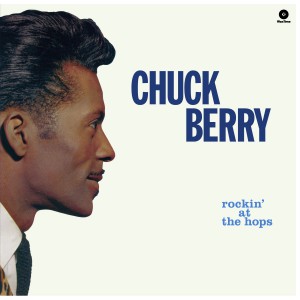
- Chuck Berry: Rockin’ at the Hops