Vera Fischer
Bio
Vera Fischer
(1925, Zagreb / HR – 2009, Zagreb / HR)
Fischer was only a year old when her father died, so she was brought up by her mother and grandparents. She received her diploma in 1951 from the University of Fine Arts in Zagreb. Her primary instructor was sculptor, painter and author Vanja Radauš (1906–1975).
Her first public appearance was in 1952 at the 8th Croatian Association of Artists exhibition. She became a member of the group the same year. She has participated in numerous solo and group exhibitions at home and abroad. She was an active member of the Jewish community in Zagreb. In 1997, president of Croatia Franjo Tuđman awarded Fischer with the Order of Danica Hrvatska. In 2002, a retrospective exhibition of her works was organized at the Glyptotheque-Sculpture Museum in Zagreb.
Fischer was first and foremost a sculptor, but she also made numerous collages in which the influence of Richard Hamilton can be perceived. Of her collages made in the 1960s, three were on view at the group exhibition Gender Check – Femininity and Masculinity in the Art of Eastern Europe (13 November 2009 – 14 February 2010) organized at the MUMOK in Vienna. The exhibition centred around feminism and the question of gender identity in socialist/post-socialist countries.
+
Vera Fischer’s name recently appeared in the context of a major exhibition focusing on Eastern Europe, presented in 2009/2010 at the museum moderner kunst stiftung ludwig wien. In autumn 2007 ERSTE Foundation and the PATTERNS Advisory Panel selected the project concept of Bojana Pejić to mark the twentieth anniversary of the fall of the Iron Curtain. Her exhibition titled eventually Gender Check – Femininity and Masculinity in the Art of Eastern Europe focused on gender difference(s) in Eastern European art from the 1960s to the present day. It required exhaustive research: twenty-five art historians and critics scoured archives, museums and libraries, artists’ legacies and exhibition catalogues in 24 countries ranging from Lithuania and Bulgaria to Armenia and the former East Germany. Vera Fischer was present at the Mumok Wien with three collages from the same series that her 1968 work exhibited presently at the Ludwig Museum, Budapest.
World News
1975 in the World
- The UN launches the international Year of Women, intended to foster emancipation.
- Paul Allen and Bill Gates establish Microsoft. Altair 8800, the first PC is introduced in the U.S.
- The siege of Saigon finally ends the Vietnam War.
- The first joint American-Russian space project: Soyuz 19 and the Apollo spacecraft join and fly together for 48 hours.
- Pier Paolo Pasolini Italian poet, author and film director is brutally killed.
- Country poll in Hungary: the number of inhabitants is 10.532.000
- Death of Spanish dictator Franco. Juan Carlos I takes over the power.
- The milestone ‘0’ is inaugurated in Budapest.
Art Life
1975 in Art History
- Graffity action painting by Tibor Hajas: “Letter to my Friend in Paris”
- The Workers’ Museum opens in the renovated Buda Castle. Ludwig Museum will take its place later, and function in the building until 2005. Meanwhile, the National Gallery moves to Buda Castle, its new director is Loránd Bereczky.
- Exhibition in the Kunstmuseum, Bonn, with the title “Neue Ungarische Konstruktivisten”, with the participation of the new Hungarian constructivist painters: Imre Bak, János Fajó, Tibor Gáyor, István Haraszty, Tamás Hencze, Imre Kocsis, Dóra Maurer, András Mengyán, István Nádler, László Veszprémi.
- Premier of the film Centaur by Tamás Szentjóby in the Béla Balázs Film Studio. The censor confiscates the film copy.
Design, Lifestyle
Verner Panton (1926-1998)

UFO lamp, 1975
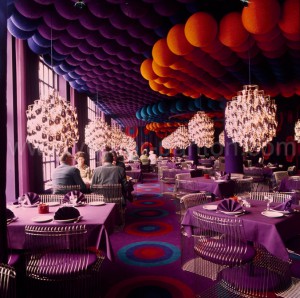
The Danish Verner Panton was an influential figure of the 20th century. He studied architecture at the Odense Teknise Skole and the Kongelige Danske Kunstakademi.He founded his own design and interior design company in 1955, which quickly became famous due to his bold and innovative concepts. He became famous mainly due to his chairs, lamps and rug designs. He created his S-shaped (Panton) chair made of plastic, which he originally designed along with the Thonet. Later, Panton opened an office in Basel, where he received first class orders. A lot of restaurants – among them the Varna Palace on Aarhus, Denmark – commissioned him to remodel their spaces. His cutting edge architectural designs feature unusual forms and bright colours. His UFO lamp is from 1975.
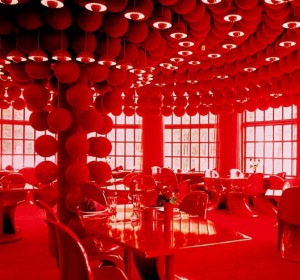
Varna Restaurant, Aarhus, Denmark, 1971
Film
1975 and film
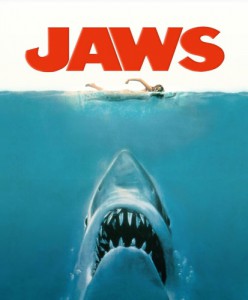
- Steven Spielberg: Jaws
https://www.youtube.com/watch?v=P61m4uWZET4
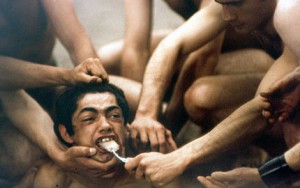
- Pier Paolo Pasolini: Salò, avagy Szodoma 120 napja
https://www.youtube.com/watch?v=OFTIoNQqHkQ
- Miloš Forman: Száll a kakukk fészkére
https://www.youtube.com/watch?v=MKTrVgnEois

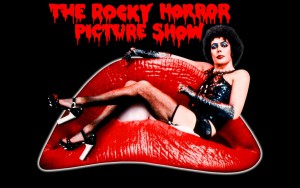
- Jim Sharman: The Rocky Horror Picture Show
https://www.youtube.com/watch?v=3BuHZ10BWes
Music
1975 and music
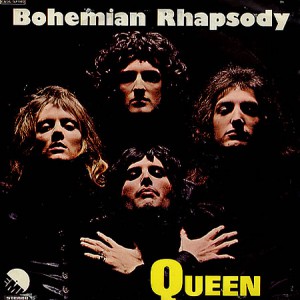
- A Queen: Bohemian Rhapsody
https://www.youtube.com/watch?v=fJ9rUzIMcZQ
- Aerosmith: Sweet Emotion
https://www.youtube.com/watch?v=xvKF3WQYADk
