Andy Warhol 2.
Bio
Andy Warhol
(1928, Pittsburgh / USA – 1987, New York / USA)
Originally named Andrew Warhola, Andy Warhol was born to a family who had immigrated to the Unites States following World War I. In 1949, he moved to New York and changed his name to Andy Warhol. As he was often bedridden, he spent much of his childhood years at home listening to the radio, collecting pictures and drawings. He looked back on this time as having been an important period in his artistic development. Warhol studied graphic design and began his career in this field, but also designed stage sets, bookmarks, greeting cards and even women’s shoes. He organized his first solo exhibition in 1952. Between 1955 and 1957, he made illustrations for I. Miller shoes which appeared on a weekly basis in the New York Times. In 1956, his drawings were shown in an exhibition organized at the Bodley Gallery. Essentially from this point on, his career as an artist truly began, as did his friendship with contemporary artists, for instance, his friendships with Jasper Johns, Claes Oldenburg and Robert Rauschenberg. He founded his studio, called the Factory, in Manhattan in 1963. It was then that he began seriously working with film. In 1969, he launched a film periodical entitled Interview. Warhol died in 1987 due to post-operative complications.
+
Andy Warhol and the portrait genre
Warhol began making portraits in the Sixties of, among others, Marilyn Monroe, Elvis Presley and Elizabeth Taylor. In the Seventies he received numerous portrait commissions from wealthy patrons, which signified one of the major sources of income for him. In a sense Warhol recreated the official portrait genre. However, only formally was his portraiture connected with the European tradition: famous people appear not as the creators of communal values, but as products.
The Ludwig couple and Pop art
“Peter Ludwig, who recognized the significance of pop art and hyperrealism early on and was one of the earliest and most important collectors of works belonging to these movements (in the case of pop art Karl Stöhrer was a collector of comparable significance), beginning in the Seventies followed the events beyond the Iron Wall and the tendencies in Eastern European art. He regarded the realistic depiction of life highly and considered such works as documents of an age, among others, including them into a collection consisting of nearly twelve thousand works of art.” (Új Művészet, 2013)
The New York-based entrepreneur Robert C. Scull and his wife began collecting works of pop art in the Fifties, an activity which soon drew the attention of the Ludwig couple. A few years later they were regarded as, beside Karl Stöhrer and Giuseppe Panza di Biumo, one of the three most important European private collectors of art. In 1969 the first exhibition of pop art entitled Art of the Sixties opened at the Wallraf Richarts in Cologne and had an enormous success. The couple’s commitment to this was considered as a milestone and the exhibition felt its influence all over Europe.
Peter Ludwig. “I think that every work of art from this period provides a true portrait of the environment in which we live. (…) We should occupy ourselves with the art of today, trying to experience it and understand it.”
Sources:
Péter György: Pénz a falon (Money on the Wall) (Új Művészet)
Ludwig Goes Pop – exhibition catalogue, Museum Ludwig, Walter König, Cologne, 2014 / Museum moderne Kunst Stiftung Ludwig Wien, 2015.
Andy Warhol’s portrait of Peter Ludwig
Andy Warhol created a portrait of Peter Ludwig on more than one occasion, here are a few examples from the collections of other museums:
National Art Museum of China – http://www1.chinaculture.org/classics/2013-09/03/content_480924.htm
Ludwig Forum Aachen – http://ludwigforum.de/2015/07/peter-ludwig-waere-am-9-juli-2015-90-jahre-alt-geworden/
World News
1980 in the World
- Sensus in the USA: according to official data, the population of the country on the 1st April is 226,545,805. Sensus is Hungary, too: the population is 10,710,000.
- After one week in space, Bertalan Farkas Hungarian astronaut returns to Earth.
- The first Western-style shopping mall, Sugár opens at Örs Vezér Square.
- Military coup in Turkey, affecting the next 3 years of the country, before democracy is re-introduced.
- Open war between Iraq and Iran, which lasts until 1988.
- Ronald Reagan becomes presdent of the U.S.
- The game Pac-Man is launched in Japan: Pac-Man becomes a popular ”figure” of 80s culture.
- CNN, the first 24-hour news channel is launched.
- As a result of the strike wave in Poland, the Gdansk Treaty is created. Also start of the Solidarity Movement, the first trade union federation withing the Eastern block, which is not controlled by the Socialist party.
- Death of Josip Broz Tito, John Lennon, and Alfred Hitchcock.
- Jean-Paul Sartre.
Art Life
Art Events from 1980
- A major retrospective exhibition from the oeuvre of Picasso opens at the New York Museum of Modern Art. This was the artist’s biggest and most extensive show in the USA.
- Benedikt Taschen opens his comic shop at the age of 18 in Cologne, Germany: today, Taschen is one of the world’s biggest art book publisher.
- Gábor Klaniczay historian remembers the 80s: “In January 1980 I felt that my life was at a turning point. That it was the end of an era, that a lot of changes lay ahead of me, and I even wrote a list of all these things. The anti-culture and life-style revolution of the 60s and 70s, which used to be my compass before, felt empty. Due to the mass movements after 1978, mainly in 1979, the milieu of the democratic opposition started to take shape. We were reading, writing, typing and distributing samisdat publications. New groups started to form at universities, new hopes were born.” (Source: Artpool)
- Hommage á Iparterv exhibition in Fészek Gallery, remembering the important art events in 1968/69.
- Death of Tibor Hajas, Oskar Kokoschka and Tex Avery.
Design, Lifestyle
The Rubik’s Cube
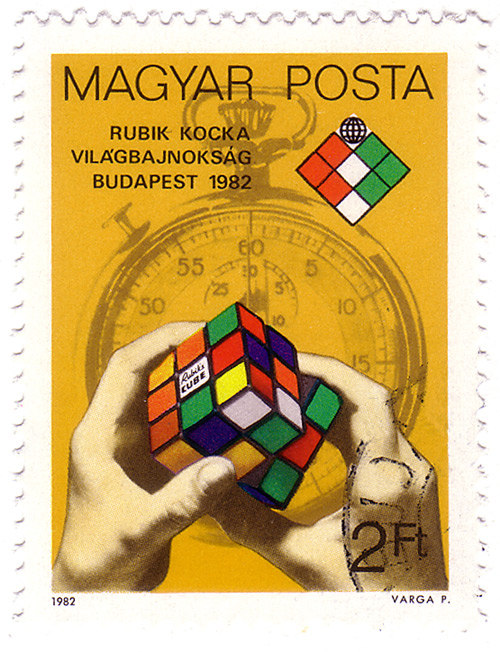
The first world championship – on stamp
The Rubik’s cube was invented by Ernő Rubik Jr. in 1974. He handed in his requested for patent on the 30th of January 1975, but it was only granted on the 31st of December 1977. After this, the magic cube started to spread in Hungary. In 1980, the magic cube was renamed Rubik’s cube. Around 1 million cube was sold in Hungary, which means one in every 10 people had a Rubik’s cube. International distribution followed, through the american toy company, Ideal Toy. The contract for international distribution was signed in 1979, the toy appeared in 1980 at international toy fairs in London, Paris, Nürnberg and New York. The first Rubik’s cube championship was organised in 1982.
Film
1980 and film
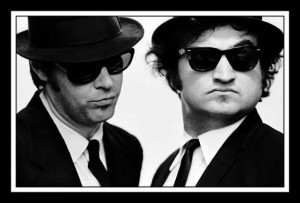
- John Landis: Blues Brothers
https://www.youtube.com/watch?v=5_SbLi-X8JI
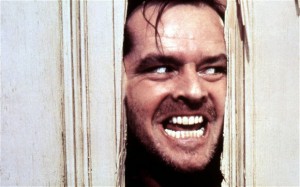
- Stanley Kubrick: The Shining
https://www.youtube.com/watch?v=5Cb3ik6zP2I
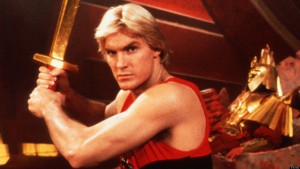
- Mike Hodges: Flash Gordon
https://www.youtube.com/watch?v=OROLRvKamdE
Music
1980 and music
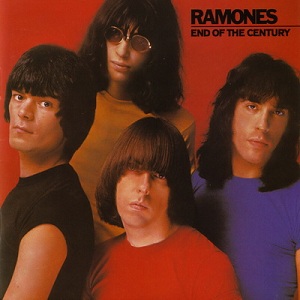
- Ramones: End of the Century
https://www.youtube.com/watch?v=FhKpqXIjckk&list=PLBC73BC49EEB76D09
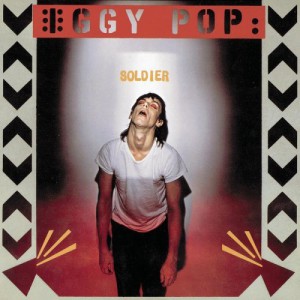
- Iggy Pop: Soldier
https://www.youtube.com/watch?v=nASOZH5wnRw&list=PL1VKdJVQQg1k5zWixQ2G96yufbdbZtvBG
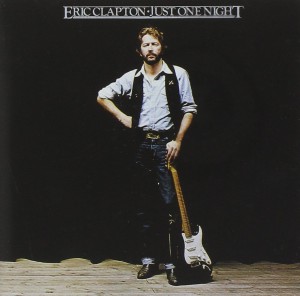
- Eric Clapton: Just One Night
https://www.youtube.com/watch?v=Z6RgI99vJQE