Andy Warhol
Bio
Andy Warhol
(1928, Pittsburgh / USA – 1987, New York / USA)
Originally named Andrew Warhola, Andy Warhol was born to a family who had immigrated to the Unites States following World War I. In 1949, he moved to New York and changed his name to Andy Warhol. As he was often bedridden, he spent much of his childhood years at home listening to the radio, collecting pictures and drawings. He looked back on this time as having been an important period in his artistic development. Warhol studied graphic design and began his career in this field, but also designed stage sets, bookmarks, greeting cards and even women’s shoes. He organized his first solo exhibition in 1952. Between 1955 and 1957, he made illustrations for I. Miller shoes which appeared on a weekly basis in the New York Times. In 1956, his drawings were shown in an exhibition organized at the Bodley Gallery. Essentially from this point on, his career as an artist truly began, as did his friendship with contemporary artists, for instance, his friendships with Jasper Johns, Claes Oldenburg and Robert Rauschenberg. He founded his studio, called the Factory, in Manhattan in 1963. It was then that he began seriously working with film. In 1969, he launched a film periodical entitled Interview. Warhol died in 1987 due to post-operative complications.
+
129 Die In Jet
Warhol’s inspiration for 129 Die in Jet was a New York airline disaster, not so much the crash itself, but rather a photograph of the wreckage that was published in the June 4th issue of the New York Mirror in 1962. Warhol projected the image taken on the ground, in which the tail of the crashed jet-propelled plane is erect, and painted a copy of it. He used not only the photograph, but also the title heading of the sensationalist newspaper, especially the headline announcing the death of 129 people, which continues below the photograph with the words “IN JET”. The title of the newspaper appears on the upper segment of the work, together with the date of publication and the serial number of the publication. Warhol emitted a few uninteresting motifs, but added a star to the upper left corner.
Andy Warhol and disaster pictures
Only rarely do people appear in Warhol’s death and disaster series. In most cases death remains “impersonal”. Warhol stated that his death series consist of two parts. The first one depicts famous dead people, the second group depicts dead people of whom no one has ever heard. The artist used newspaper photographs which at the time were accompanied by accounts relished with mordant horror and devoid of any human emotion. The theme of death recurred in his series Skulls and Shadows.
Through Warhol’s reproductions and catalogues, the unknown characters and corpses in these images became as well-known as their famous counterparts (and also remained just as impenetrable as masks and props).
Source: Irodalmi Rádió, Beszélő
A few curious details from the life of Andy Warhol
- In June 1968, Valerie Solanas, a character from one of his films, shot him three times in the chest. The severely injured artist never fully recovered from the accident.
- “He asked the reigning American beauty queen to accompany him to the opening of his first important exhibition, which was organized in 1965 in Los Angeles. Because of the crowd she drew, utter chaos broke out within the rooms of the institution. The organizers had to concede that the only way to save the works from the bustling crowd was to take them down from the walls. The opening therefore occurred without any works on the walls and Warhol and his companion were extricated from the curious crowd with the use of a fire ladder.” (Artportal)
- Marcel Duchamp and Andy Warhol met in 1963 in Pasadena, when Warhol exhibited his works of Elizabeth Taylor and Elvis Presley.
- Warhol collected stuffed animals: he had a lion, a peacock, a penguin, a moose head and a German dog named Cecil.
- In 1959, Warhol published a cookbook with Suzie Frankfurth entitled Wild Raspberries, inspired by Ingmar Bergman’s 1957 film Wild Strawberries.[1]
- In the 1950s, 1960s, and 1970s, he always kept a box beside his desk in which he collected all types of things, each box was taped shut and marked with a precise date. There are about 600 such parcels, that Warhol referred to as time capsules. (http://www.warhol.org/tc21/) Salvador Dalí once gave him a case full of palettes which are in one of these boxes.
- Since 2014, there has been a live broadcast of Andy Warhol’s grave available to anyone online: http://www.warhol.org/figment/
[1] képek http://www.brainpickings.org/2013/11/20/wild-raspberries-andy-warhol-cookbook/
World News
1962 in the World
- Start of the Cuban rocket crisis, on the 14th October 1962, after American spy airplanes discovered that Russia had planted potentially nuclear rockets on the island. It caused serious conflict between the two super powers. Fortunately, Kennedy and Hruschov came to an agreement without starting a nuclear war.
- Death of Marilyn Monroe: the official statement describes her death as suicide, even though many have questioned this every since. Her death deeply shocked the public.
- The High Court of the United States forbids prayer in state schools.
- Printers’ strike in New York against modernisation and machine based printing; the trade union backs them up. The strike lasted 114 days, between th 8th December 1962 and the 1st April 1963, which meant no newspapers during this period.
- Yves Saint Laurent presents his first collection in collaboration with Pierre Bergé.
- John F. Kennedy and the Congress vote for the lanch of the space programme Apollo, in order to put a man on the Moon: the goal is eventually reached in 1969, when the Apollo 11 landed on the Moon.
- The first Hungarian talent show Ki Mit Tud? is broadcasted on national television.
- Start of the Algerian truce, putting an end to the war between France and Algeria that has been going on since 1954. France acknowledges the independence of Algeria.
- Publication of the first Spider-Man and The Incredible Hulk Barbarella appears in France.
Art Life
Events in Art History from 1962
- The Pasadena Art Museum organises the exhibition New Painting of Common Objects, the first attempt to show American pop art. Eight artists participate at the show: Roy Lichtenstein, Jim Dine, Andy Warhol, Phillip Hefferton, Robert Dowd, Edward Ruscha, Joe Goode and Wayne Thiebaud. The curator of the exhibition is Walter Hopps, who organised Andy Warhol’s one-man show in Los Angeles a year earlier. The exhibition in Pasadena prepared the critical acceptance of pop art, one year before the exhibition titled Six Painters and the Object in the New York Guggenheim.
- Death of Yves Klein and Natalya Goncharova.
Design, Lifestyle
Tandem Sling Seating
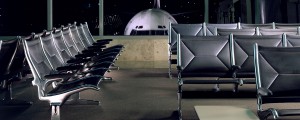
Charles & Ray Eames – Tandem Sling Seating, 1962
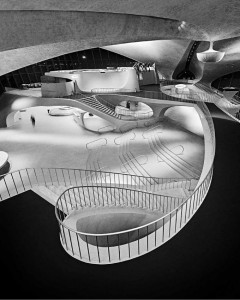
JFK nemzetközi repülőtér
The ”Tandem Sling Seating” was created by Charles and Ray Eames designers for the Washington Dulles international airport and for the O’Hare international airport in Chicago: they wanted to create an attractive, comfortable and sturdy seating sytsem.It is made of cast steel, nylon straps and polyurethane armrests. The chairs were produced by a leading furniture design company Herman Miller about half a century ago. The company was also involved in the creation of Verner Panton’s Panton chair.
Film
1962 and film
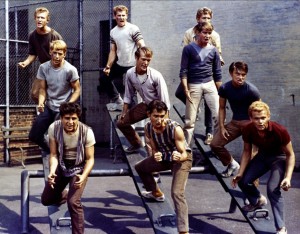
- Robert Wise, Jerome Robbins: West Side Story
https://www.youtube.com/watch?v=bxoC5Oyf_ss)
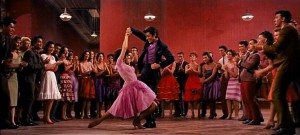
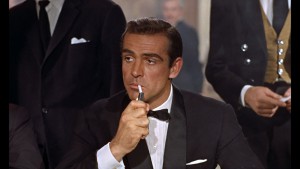
- Terence Young: James Bond / Dr. No
https://www.youtube.com/watch?v=7Q9QyChJeNU)
- Stanley Kubrick: Lolita
https://www.youtube.com/watch?v=dY0LrmKXsB8

Music
1962 and music
- Leonard Bernstein – West Side Story
https://www.youtube.com/watch?v=VKqESnFmTmA&index=1&list=PLCD30B46A0041DF14)
- Bob Dylan: Bob Dylan album
https://www.youtube.com/watch?v=_o3s238szZk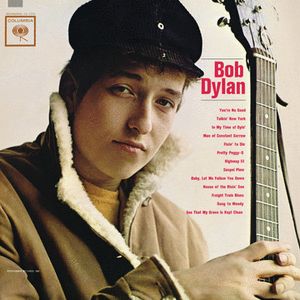
- The Beatles: Love Me Do
https://www.youtube.com/watch?v=Jbt8oH5Lxto