Běla Kolářová
Bio
Běla Kolářová
(1923, Terezín / CZ – 2010, Prague / CZ)
Běla Kolářová worked as an artist and a photographer, but for a long time her work was not regarded as an autonomous, independent oeuvre. She worked mostly in the shadow of her artist husband, Jiří Kolář, who won renown with his collages. During a trip to France in 1980, the Kolář couple decide to settle in Paris. A year later, Běla travelled back to Czechoslovakia for official reasons, but had to wait until 1985 for the authorities to allow her to return to Paris. In 1999, Běla Kolářová and her husband returned to Prague for good.
Kolářová experimented as an artist and worked with a variety of techniques. Her scheme of motifs was closely tied to the subject of femininity and the enigmatic objects of the private sphere. Works such as Day after Day and Semaphores of Lips, which were made with the use of makeup, follow this feminist streak. Although she participated in numerous exhibitions, only in recent years has Europe taken notice of her work, for instance the Documenta of 2007, which was followed by exhibitions that focused exclusively on her work organized in Munich (2009) and London (2010).
Sources
- Bojana Pejic (ed.), Gender Check: A Reader: Art and Theory in Eastern Europe, Cologne, Walther König, 2009
- Distorted Arts online
- Contemporary Art Daily online
+
“Artificial negatives”
The pronouncement of photographer Henri Cartier-Bresson that “the entire world has been photographed” had a deep impact on Běla Kolářovára: she attempted to produce pictures without a camera. The experimentation eventually led to the development of her own technique, the making of “artificial negatives”. She pressed various objects and organic and artificial materials into a thin layer of soft paraffin wax and placed them on sensitised photographic paper. These so-called “artificial negatives” preserve the imprints of everyday rituals, such as cooking, sewing, eating or putting on makeup.
Literary figures in the art of Kolářová
From the mid-1960s onwards, numerous literary figures served as sources of inspiration for Kolářová’s art. She combined existing pictures, such as the portraits of Samuel Beckett or Walt Whitman, with her own light-paintings, such as an X-ray of a circle. Towards the end of the 1980s, she paired works by Jiří Kolář with texts from poets like Dante, Baudelaire and Mallarmé. She created visual representations of the poems’ structures with assemblages made of tiny pieces of jewellery, hair and other materials.
Source:
Martina Pachmanová, Three Secrets of Běla Kolářová, in: Bojana Pejic (ed.), Gender Check: A Reader: Art and Theory in Eastern Europe, Cologne, Walther König, 2009
World News
1966 in the world
- The Great Proletarian Cultural Revolution is announced in China.
- Indira Gandhi becomes the prime minister of India.
- In June, in the municipal canton of Basel women are granted the right to vote. In November, men vote against women’s suffrage in Zurich. The National Organization for Women is formed.
- In the United States the Black Panther Party is founded.
- In the United States health warnings begin to be required on cigarette packs.
- Although it had already been part of women’s fashion, the miniskirt associated with Mary Quant becomes popular in 1966.
- The Luna-9 Soviet space probe lands on the surface of the moon. The Americans launch the Lunar Orbiter 1 into space.
- Barbados, Lesotho and Botswana obtain their independence from Great Britain.
- The Vatican rules that members of the Catholic church married to members of other religions will not be excommunicated.
Art Life
Events in the art world in 1966
- As the leading figure of Fluxus George Maciunas establishes Fluxus West under the direction of Ken Friedman, while Milan Knizak takes the lead of Fluxus East. Kaprow’s book Assemblage, Environments, and Happenings is published.
- Ernst Museum, Budapest / Exhibition entitled “Studio ‘66”. After sharp debate, representatives of the new movements receive a separate room: Sándor Altorjai, Imre Bak, András Baranyay, László Gyémánt, Gábor Karátson, Ilona Keserü, Ferenc Kóka, György Korga, László Lakner, János Major, Sándor Molnár, Ludmil Siskov.
- The cellar of István Szenes, Hegyalja St. 20/b, Budapest: the first happening in Hungary, “The Lunch (In Memory of Batu Khan)”, participants: Gábor Altorjay, Tamás Szentjóby.
- Alberto Giacometti, André Breton and Walt Disney die.
Design, Lifestyle
 Palmolive and the year 1966
In the 19th century in Milwaukee, Wisconsin the B.J. Johnson Soap Company developed a soap made of palm oil and olive oil. The soap soon became so popular that in 1898 the company was renamed Palmolive.
In 1966, the liquid version of Palmolive dishwashing detergent appeared on the shelves of stores. Thanks to its effectiveness, it became an immediate success among consumers, thus revolutionizing households.
Film
1966 and film
Ingmar Bergman: Persona
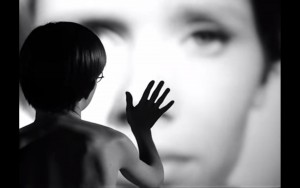 One of the central works by the director, Persona, which was made in 1966, not only summarizes issues raised in other works by Bergman, such as the state of solitude, the inability to form relationships, the connection between health and illness, and defencelessness against violence, but also reflects on the frightening experience of losing our identities. Bergman depicts this in his unique manner through the relationship between Elizabeth and Alma, during which the personalities of the actress who has withdrawn into a state of speechlessness and the nurse assigned to care for her disintegrates and finally merge into one.
The complete film:
https://www.youtube.com/watch?v=ySa4fK9SqII
Jean-Luc Godard: Masculin – Féminin
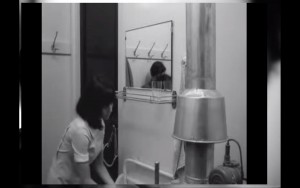 According to the film’s basic premise, upon leaving military service and stepping into “life,” a young man, Paul, finds himself in a world in which sexuality is in the foreground. During the intimate dialogues among the characters, the conversations rotate around people’s love lives and, even more so, sexuality; the intimate discourses, the private lives of the characters are laid open by the undisguised voyeurism of the camera. At the same time, in addition to the subject of sexuality the film also addresses political transformations and the everyday culture of the time.
An excerpt from the film:
https://www.youtube.com/watch?v=53KROTcwf-Y
Péter Józsa, Bergman szerint – rész szerint: Modernizmus és önreflexió Ingmar Bergman filmjeiben 1961-1969
Ira Konigsberg, “These Shadows Possess a Power”: The Struggle for Self-Analysis in Ingmar Bergman’s Persona. In: Literature and Psychology: Proceedings of the Seventh International Conference on Literature and Psychology (Urbino, July 6-9, 1990). Instituto Superior de Psicologia Aplicada, Lisbon, 1991, pp. 163-167.
Ágnes Pethő (ed.), Köztes képek: A filmelbeszélés színterei, Cluj-Napoca, Scientia Publishing House, 2003
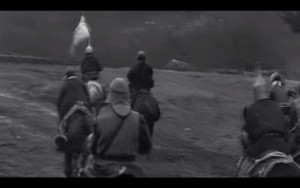
Andrei Tarkovsky: Andrei Rublev
https://www.youtube.com/watch?v=_tLsRA68aXQ
Sergio Corbucci: Django
The original trailer for the film:
https://www.youtube.com/watch?v=w8Ge2hmSTbo
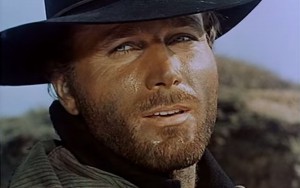
Zoltán Várkonyi: Egy magyar nábob [A Hungarian Nabob]
An excerpt from the film:
https://www.youtube.com/watch?v=Kyty7RoGro0

Music
1966 and music
Hungary
The band Metro performed their own composition, Mi fáj? [What Hurts?], at the (first!) Pop Music Festival in 1966, and it became a hit. In the same year, their first small record, entitled Édes évek [Sweet Years], was produced. The similarly successful band Illés received the Golden Guitar Award and in 1966 was designated as the “Beat Band of the Year”. A documentary by András Kovács made in 1969 provides a picture of what beat culture represented in Hungary and what bands like Metro, Illés and Omega signified for the country’s youth.
Metró – Sweet Years, 1966
https://www.youtube.com/watch?v=UQfaXO1RbEw
András Kovács, Ecstasy from 7 to 10 (excerpt), 1969
https://www.youtube.com/watch?v=7JgJLYMHIyE
Simon and Garfunkel: Sound of Silence
https://www.youtube.com/watch?v=4zLfCnGVeL4

The Rolling Stones: Paint It Black
https://www.youtube.com/watch?v=u6d8eKvegLI

The Beatles: Yellow Submarine
https://www.youtube.com/watch?v=laRyswIO_-g
