Boris Bućan
Bio
Boris Bućan
(1947, Zagreb / YU (HR) – )
Boris Bućan, after graduating from the School of Applied Arts in Zagreb, entered the Academy of Fine Arts in Ljubljana in 1967; later, he continued his studies at the Zagreb Academy of Fine Arts graduating in 1972. He became a painter and graphic designer close to Gallery SC, the most innovative exhibition space in Zagreb. His detachment from the traditional understanding of visual arts, toward ambience and conceptual art, performance, new media and intermedia exploration, defined the Croatian visual scene in the second half of the century. His informal group of artists stepped out of the gallery space with its resistance to institutionalised art, and its intervening in the environment and urban tissue of a city. His action of colouring the sidewalk in Varsavska Street, and later a dilapidated façade on Savska Street in 1969 made public his idea of the necessary overcoming of media and class divisions in the name of the expansion and extension of art into real life. At the beginning of the 1970’s, using the interaction of words and signs, he turned toward researching the meanings and functions of various conventions of visual art and communication. Bućan has had more than seventy solo exhibitions and over 160 group exhibitions of which the most famous was at the Venice Biennale in 1984. He became famous in Croatia for his graphic design, illustrating many posters and album covers during the 1980s – 90s for events and bands as far away as Japan and Africa.
Source:
Podrucje zastoja / Standstill, Zagreb, Avant-garde Research Institute, 2011
+
Ethnicities and their status in Yugoslavia
The state of Yugoslavia was formed after World War I when it was officially called the Kingdom of Serbs, Croats, and Slovenes. The name “Yugoslavia” essentially means “Southern Slavs” and contained a staggeringly diverse collection of ethnicities, namely Albanians, Bosnian Muslims (also referred to as Bosniaks), Macedonians, Croats, Hungarians, Montenegrins, Serbs, and Slovenes. While the majority were Slavic peoples, they each had a reasonably distinct language, history, and culture.
Tito’s Yugoslavia was made up of six republics, each with its own parliament and president: Croatia (mostly Catholic Croatians), Slovenia (mostly Catholic Slovenes), Serbia (mostly Orthodox Serbs), Bosnia–Herzegovina (mostly Muslim Bosniaks, but with very large Croat and Serb populations), Montenegro (mostly Orthodox), and Macedonia (with about 25 percent Muslim Albanians and 75 percent Orthodox Macedonians). Within Serbia, Tito set up two autonomous provinces, each dominated by an ethnicity that was a minority in greater Yugoslavia: Albanians in Kosovo (to the south) and Hungarians in Vojvodina (to the north). By allowing these two provinces some degree of independence — including voting rights — Tito hoped they would balance the political clout of Serbia, preventing a single republic from dominating the union. Each republic managed its own affairs, but always under the watchful eye of president-for-life Tito, who said that the borders between the republics should be “like white lines in a marble column.” “Brotherhood and unity” was Tito’s motto, nationalism was strongly discouraged, and Tito’s tight — often oppressive — control kept the country from unravelling. Despite the autonomy of the federal states, Serbia was favoured over the other republics. The relatively developed Croatian and Slovene parts did not tolerate well that their resources were spent on emerging the Serb republic, so the separatist movements were always present.
Source: Minority Rights Group International online
World News
1972 in the World
- Apollo 17, the last manned Moon mission is launched. The “Blue Marble” photograph of the Earth is taken.
- Richard Nixon and Leonid Brezhnev sign SALT 1 treaty and the Anti-Ballistic Missile agreement.
- Operation Linebacker II: the operation was conducted from 18–29 December 1972, known as the “Christmas bombings,” was the most intense air assault of the Vietnam War. The event caused widespread criticism of President Nixon.
- The last major epidemic of smallpox in Europe breaks out in Yugoslavia
- Watergate Scandal: in 1972 five employees of a Republican Party with strong links to the presidential aides of Richard Nixon were arrested for breaking into the headquarters of the Democratic Party’s national committee in the Watergate complex. They intended to wiretap the phone conversations of the committee. It was soon discovered that their actions formed part of a campaign to help President Nixon to win the 1972 election.
- Túszdráma a müncheni olimpián: terroristák túszul ejtenek tizenegysportolót: valamennyi túsz életét veszti, nagyobbrészt a rendőrség szabadító-akciójának következtében.
Art Life
Events in the art world in 1972
- Under the direction of Harald Szeemann, Documenta 5 was organized in Kassel. It was the first time that the event, which presented the works of 222 artists, had an “art director”. The event drew a crowd of 222 000 visitors. D5 focused on “individual mythologies”.
- The 36th Venice Biennale was organized. For the first time, a general theme was introduced, namely the “Opera o Comportamento”, or “Work or Behavior”.
- Founding of the Vajda Lajos Studio in Szentendre.
- The Geologist László Tóth mutilated Michelangelo’s Pietá in the Vatican.
- Maurits Cornelis Escher died.
Design, Lifestyle
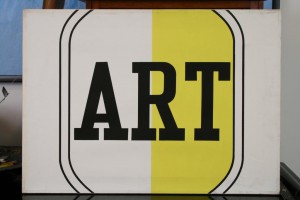
“Bućan Art”
Boris Bućan is well-known for covering the standard format of his canvases with the emblems of globally recognised and Croatian/Yugoslav companies, such as Coca Cola, Swissair or the Croatian Radio, but instead of keeping their names, he inscribes the word ART following a Neo-Dadaist concept.
He “recreated” for instance the logos of Opel, Avis, Ilirija, Rolls Royce, Radiotelevizija Zagreb, Shell, etc.
OPEL
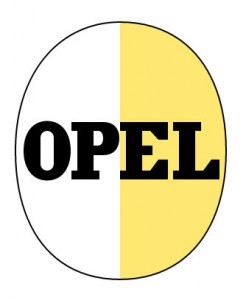
Opel is a German automobile manufacturer headquartered in Rüsselsheim, Germany, and was founded in 1862, by Adam Opel. At the beginning, Opel just produced sewing machines in a cowshed in Rüsselsheim. The first cars were produced in 1899 after Opel’s sons entered into a partnership with Friedrich Lutzmann, a locksmith at the court in Dessau in Saxony-Anhalt, who had been working on automobile designs and the company started to build cars and motorcycles. In 1972, when the Bucan ART series was created, Opel became the largest German automobile manufacture. Today Opel operates 11 vehicle, powertrain, and component plants and four development and test centers in seven countries, and employs around 35,000 people in Europe. The brand sells vehicles in more than 50 markets worldwide.
Rolls Royce

Rolls-Royce Limited is a British car-manufacturing and, later, aero-engine manufacturing company founded by Charles Stewart Rolls and Sir Frederick Henry Royce in 1906 as the result of a partnership formed in 1904. In addition to the company’s reputation for superior engineering quality of which has led to its epithet as the “best car in the world”, Rolls-Royce Limited was known for manufacturing the high-powered “R” engines responsible for land and air speed records as well as successful performances in automobile racing. The sixties saw Rolls-Royce as a status symbol, many actors, pop stars and celebrities of the day choosing the marque; Rolls-Royce became a star of the silver screen itself. In 1964, a yellow Barker-bodied Phantom II shared the limelight alongside Omar Sharif, Ingrid Bergman and Rex Harrison in The Yellow Rolls-Royce. In 1965 John Lennon took delivery of a Phantom V. It left the factory with a plain white finish, which Lennon had repainted in matt black. Becoming bored with this new finish he had it repainted with a psychedelic design, and this Rolls-Royce is now one of the most valuable pieces of pop memorabilia.
Shell
Royal Dutch Shell plc is an Anglo-Dutch multinational oil and gas company headquartered in the Netherlands and incorporated in the United Kingdom. In 1907, the Royal Dutch Shell Group was created through the merger of two rival companies: Royal Dutch Petroleum Company and the “Shell” Transport and Trading Company Ltd of the United Kingdom. It was a move largely driven by the need to compete globally with another company called Standard Oil. By the end of the 1920s Shell was the world’s leading oil company. They contributed to the invention of the jet engine and in 1951 formed partnership with Ferrari. Today Shell is one of the most valuable companies.
RTZ (Radiotelevizija Zagreb) / Today Hrvatska radiotelevizija.

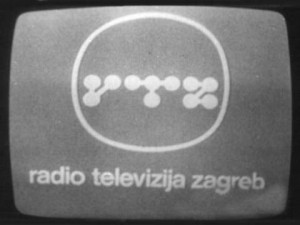
Croatian Radiotelevision is a direct successor of Zagreb Radiostation (Radio stanica Zagreb) that started broadcasting in 1925 from St Mark’s Square. Radio Zagreb was nationalized in 1940 and started receiving substantial government funding from Yugoslavia. During the Ten day War of Independence, Yugoslav aircraft attacks destroyed the transmitter stations at a number of places.
Alpina
Alpina is an automobile manufacturing and tuning up company based in Buchloe, in the Ostallgäu district of Bavaria, Germany selling their own cars, based on BMW cars. The firm was founded in 1965 by Burkard Bovensiepen.
Austrian Airlines

Austrian Airlines is the national airlines of Austria and a subsidiary of the Lufthansa Group. The airline is headquartered in the grounds of Vienna International Airport where it also maintains its hub. Austria established the world’s first regular international air connection on 1 April 1918, when it opened its route between Vienna and Kiev. Initially, this served only to transport post. In July 1918, the line from Vienna to Budapest was also opened. Today the company operates scheduled services to over 130 destinations worldwide.
Source:
- http://media.gm.com/media/intl/en/opel/company_opel/history/1862-1899.html
- http://www.rolls-roycemotorcars.com/history/
- http://www.shell.com/global/aboutshell/who-we-are/our-history.html
- Wood, James, History of International Broadcasting, Vol. 2, London, 2000, 117.
- http://www.alpina-archive.com/?page_id=36
- http://www.austrianairlines.ag/AustrianAirlinesGroup/Profil/OurHistory.aspx?sc_lang=en
Film
Francis Ford Coppola – The Godfather
https://www.youtube.com/watch?v=OIBpHO1gZgQ

Andrei Tarkovsky – Solaris

Bob Fosse – Cabaret
https://www.youtube.com/watch?v=YE3xrfjAJfs

Traces of a Black Haired Girl
https://www.youtube.com/watch?v=HbYBqe6RdDg
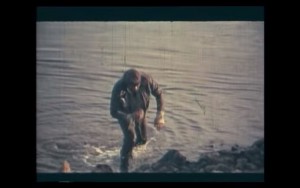
Traces of a Black Haired Girl (Serbo-Croatian: Tragovi crne devojke) is a 1972 Yugoslav film directed by Zdravko Randić. It was entered into the 22nd Berlin International Film Festival.
Music
One to One Concert
https://www.youtube.com/watch?v=gV43e_LJ3I4

John Lennon and Yoko Ono headline the “One To One Concert” at Madison Square Garden to benefit mentally handicapped children. Elephant’s Memory,Roberta Flack, Stevie Wonder and Sha Na Na also perform.
Give Ireland Back to the Irish
https://www.youtube.com/watch?v=kaO4XeHhwo8
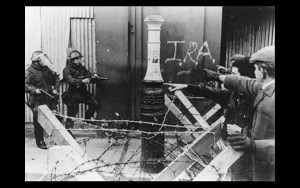
Paul McCartney’s single “Give Ireland Back to the Irish” (inspired by the “Bloody Sunday” massacre in Ireland on January 30, 1972) is banned by the BBC. The controversy caused by the banning only increases the song’s popularity and it ends up in the Top 20 in England.
Imagine, the movie
https://www.youtube.com/watch?v=EtoFcFj-BWA

Imagine is a 1972 television film by John Lennon and Yoko Ono, filmed mostly during 1971 in England. All the songs from Lennon’s Imagine album appear in the soundtrack, and also the songs “Mrs. Lennon” and “Don’t Count the Waves”, from Ono’s album Fly.