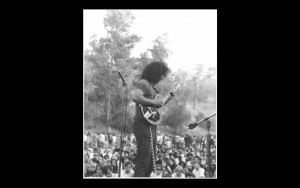
Claes Oldenburg
Bio
Claes Oldenburg
(1929, Stockholm / SE – )
As a child, Oldenburg lived in the United States because his father was employed in the diplomatic service. He graduated from Yale University, where, in addition to art, he studied literature and drama. His early years spent in New York (1959–1963) had a profound impact on his artistic career. His first solo exhibition was organized at the Judson Gallery, where he met Jim Dine. In addition to Dine, Red Grooms and Allan Kaprow had the strongest influence on his art, as their happenings, with their theatrical elements, provided a stark contrast to the abstract expressionist style, which was dominant at the time. He presented his first happening, entitled Snapshots from the City, in March 1960. His work is diverse in many respects: urban culture and various household items and objects of everyday use are all subjects that interested him, whether they appear in installations, sculptures or happenings.
Source:
Claes Oldenburg – Germano Celant, Claes Oldenburg: An Anthology, New York, N. Y.: Guggenheim Museum, 1995.
+
“A Child’s perspective”
According to his own admission, Swedish-born artist Oldenburg had a lonely childhood in the United States. His father served at the consulate in Chicago, where the young Oldenburg discovered the array of office supplies at his father’s workplace, with which he would tinker and fiddle as a child. His fiddling with the mechanical calculators and typewriters resulted in the creation of a fictitious country called Neubern, the reality of which was preserved with artefactual objects that included, for example, a colourful map and a newspaper written in a language that was a mix of English and Swedish. Born out of his passion for collecting, Mouse Museum, which is a representation of the creative process, is based on the concept of childlike motivation and the experience of collecting. It includes a collection of models of studios, objects altered by Oldenburg and objects found on the street or purchased, that have been left untouched. The artist offered the following summary of this aspect of Mouse Museum: “it can be compared with a child’s collection of toys, because a child selects whatever he or she finds useful and builds (out of it) a model of the enormous outside world. […] The result is the microcosm of my artistic creation and a panorama of the society that surrounds me.”
Moveyhouse – Mickey Mouse
Oldenburg drew a sharp distinction between his work and the famous Walt Disney cartoon character when he declared his mouse to be more artistic. Before the museum obtained its final form, the construction consisting of Oldenburg’s geometric forms travelled a long road. It first appeared in the artist’s 1965 happening entitled Moveymouse, which was performed in a movie theatre. Viewers seated in the theatre wore large mouse masks with round ears, thus creating a scene reminiscent of childhood shadow puppet theatres, while this mimetic, animal-like assimilation had an eerie effect. The drawing made for the poster for the happening mixed architecture and animation; it joined the mouse head with the shape of a classical camera.[1] The artist’s play with words, such as the Swedish mus (mouse) and the similar sounding museet (museum) as well as the name Mickey Mouse and its Swedish equivalent Musee Pigg, foreshadowed the title “Mouse Museum”. “Mickey Mouse = Multi Mouse = Multi Mousse = Movey House = Musee Mousse = Musse Pigg = Mussee Pigg.”
Sources:
- Achim Hochdörfer, Claes Oldenburg: The Sixties, NewYork, Prestel Publishing, 2012, 263.
- Viktor Sklovszkij, Art as Technique = Lee T. Lemon – Marion J. Reis, Russian Formalist Criticism: Four Essays, Lincoln, University of Nebraska Press, 1965, 5-24.
- Achim Hochdörfer, Claes Oldenburg: The Sixties, NewYork, Prestel Publishing, 2012, 264.
- Kynaston McShine, The Museum as Muse: Artists Reflect, New York, 1999, 73.
World News
1965 in the world
- At the New York World fair the second time capsule named Westinghouse is buried. According to the plan, it will be opened in 6939
- The United States launches the world’s first commercial communications satellite, named Early Bird. Alexey Leonov performs the first extravehicular activity in space, exiting from the spacecraft Voskhod-2. The Americans didn’t lag behind: Edward White floated around the two-person Gemini-4 using a flare pistol.
- The Central Committee of the Romanian Workers’ Party elects Nicolae Ceaușescu as the successor of the first party secretary, Gheorghe Gheorghiu-Dej.
- The building of the National Theatre on Blaha Lujza square in Budapest is demolished. The authorities explain this decision with references to “city planning issues.” Soon afterwards, on the 20th anniversary of the liberation of Hungary from German occupation, a statue of Lenin is unveiled on Dózsa György Avenue.
- The United States increases its military force in Vietnam while in the same year 35 thousand people demonstrate against the war in Washington alone.
- The construction of the first block housing project built out of elements manufactured by house factories commences (Szakasits Árpád Road 15-25.)
- Winston Churchill and T. S. Eliot die.
- The popular Tom & Jerry cartoon is taken over by television.
- British pop-rock flourishes in America as well. The Beatles’ song Yesterday becomes a global success and the Rolling Stones’ hit Satisfaction comes out.
- Pepsi Inc., later to become the great competitor to the Coca Cola Company, is founded.
Art Life
Events in the art world in 1965
- Kenneth E. Tyler (1931 – ), born in America to a Romanian father and a Hungarian mother, establishes his studio Gemini in Los Angeles. Tyler had an enormous role in the revival and development of post-war limited edition printmaking techniques. Renowned figures of pop art, such as Roy Lichtenstein, Robert Rauschenberg, Jasper Johns and David Hockney among others, often frequented his studio.
- Le Corbusier and Károly Lyka die.
- In the 1960s, various performance events were of great importance. Allen Kaprow made the following claims: “it signified for us the freedom to put together the real world again and again in an unusual format.” The various performances – which abolished the walls between art and life, between the various genres and branches of art – were also shown at festivals. One such interdisciplinary event was the “New York Theater Rally” in 1965, during which twenty-two performances took place, including Oldenburg’s happening entitled Washes.
- Due to economic growth in Italy an economic “miracle” took place in the country, resulting in the percentage of households owning a television to jump from 12% to 49%, a change which would play a key role in the spread of pop culture.
Design, Lifestyle
Mickey Mouse
Mickey Mouse, the worlds’s best known cartoon figure, was popularised worldwide by the Walt Disney Company. The character was officially invented by the founder of the company himself: Walt Disney. Between 1928 and 1946, he even gave his voice to Mickey.
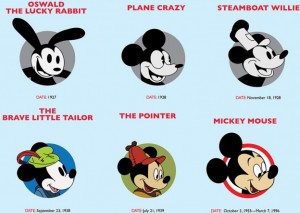
1927
Walt Disney first created Oswaldo, the Lucky Rabbit, but lost the film rights of the character. After losing in the copryight battle against Universal, he had to come up with another figure. This is how he created Mickey Mouse.
1928
- Ub Iwerks American animator transformed Oswald’s figure into Mickey Mouse and started to work on the first Mickey Mouse cartoon.
- Walt Disney and Ub Iwerks finished the first Mickey cartoon in the spring of 1928, titled Plane Crazy. However, they couldn’t find distributor for their film.
- Mickey Mouse appeared on the big screen for the first time on the 18th November 1928 at the Colony Theatre in New York. This is the official birthday of the cartoon figure. The almost 2 minute long cartoon was titled Steamboat Willie.
1955
- Walt Disney builds the first Disneyland theme park in Anaheim (USA, California).
1978
- Mickey Mouse was the first cartoon figure to receive his own star on the boulevard of the stars in Hollywood.
Transformation of Mickey Mouse throughout the years:
In the cartoons Plane Crazy (1928) and Steamboat Willie (1928), the Mickey Mouse character by Ub Iwerks was mean and had thin limbs: he tortured cats and women. As Christopher Finch British author wrote: ”The Mickey Mouse that was introduced in the cinemas at the end of the 20s, wasn’t exactly that well-behaved figure how we know him now. He was rather naughty at the least, but he also showed a good amount of cruelty, even.”
As he started to behave better throughout the years, his appearance became nicer, more child-like, as well. His head became bigger, his features rounder, his arms and legs considerably thicker. The length of his nose didn’t change, but due to the thickness of the rest of his features, it is less prominent. His eyes grew in two ways: the old Mickey’s eyes became the new one’s pupils, which grew even more in later years. (The changing of the eyes was the most notable between 1938 and 1939.)
The uniqueness of Mickey Mouse lay in the fact that he was repressed and normal. The cartoon figure became known as the embodiment of Central-American (middle class) virtues. The symbol of the Disney Empire, Mickey Mouse was turned into merchandise. Due to the franchise, he aquired worldwide fame – he ist still the best known cartoon figure in the world. Pop art was especially attracted to Mickey, since he was almost just as much a symbol of the American culture as the American flag.
Source:
Walt Disney Company online
The afterlife of Mickey Mouse in furniture design:
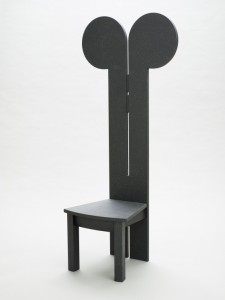
Wendy Maruyama, Mickey Mackintosh Chair, 1981

Javier Mariscal, Garriris Chair, 1987
Film
1965 and film
- Terence Young: James Bond / Thunderball
https://www.youtube.com/watch?v=7JowkFmI1Fo
- Richard Lester: Help!

https://www.youtube.com/watch?v=Sk90zngx5B8
- Jean-Luc Godard: Alphaville
Music
1965 and music
- Pink Floyd: See Emily Play
https://www.youtube.com/watch?v=5R8EpAv4miA

- Jefferson Airplane: White Rabbit
https://www.youtube.com/watch?v=gpNKJwlBZvc
- Grateful Dead: Morning Dew
https://www.youtube.com/watch?v=w9xxUgR-gy8