Bio
Ilona Keserü Ilona
(1933, Pécs / HU – )
Ilona Keserü Ilona is an important member of the neo-avant-garde generation of artists who began their activities in the mid-1960s. She is a member of what is known as the IPARTERV group. After having completed the Academy of Fine Arts, she began to explore the potentials of contemporary abstract art. Her early pictures continue the painterly world of her childhood teacher, Ferenc Martyn. During her years at the Academy, she becomes acquainted with Géza Ottlik. Her sojourn in Italy in 1962-1963 represented a turning point in her career. In 1966, she began to work on stage design. Her works for the theatre occupy an important place in her compositions that create spaces and objects. In 1967, she discovered the heart-shaped gravestones in a cemetery in Balatonudvar. This motif became central in her works for many years to come. Between 1975 and 1979, she was a member of the Budapest Műhely (Budapest Workshop). She received her first large-scale commission in 1974, which was followed by others in later years. Ilona Keserü currently lives in Pécs. In 1983, she began teaching, and she was one of the founding members of the Pécsi Képzőművészeti Mesteriskola (Master’s School of Fine Arts, Pécs). Since 1995, she has served as the director of the DLA program in painting of the faculty of arts at Janus Pannonius University of Pécs.
Source: Artportal
+
In connection with Form
In her doctoral dissertation on the oeuvre of Ilona Keserü Ilona examined from the perspective of the 1960s (2014), art historian Katalin Aknai quotes the following passage from a conversation:
“Keserü states in connection with her assemblage Form (1969) that ‘when I completed it …. those who first saw it at home in my studio asked whether I was not scared to exhibit this publicly, as it awakens absolutely unambiguous associations, and wasn’t I scared of the attacks I would subject myself to. So this is a kind of matrix erotic symbol. A very concrete reference to the female genitalia. Now you won’t believe me now – continues Keserü – but I was really taken aback then because that was not my intention when making the work; it was the previous work which I had finished, in which a small version of this symmetrical canvas element projecting from the surface appeared, and it was there I had realized that this canvas could be used in three-dimensional space as well. And in this way, they can live their own, independent lives. It was after this that I made the picture the billowing form of which simply came from the contours of gravestones.’ Keserü in the end connects the question of symbolic/metaphorical representation of the female genitalia to another stylistic system of symbols and, inquiring into the vindication of the so-called ‘female viewpoint’, she evades the task of providing an answer.”
Ilona Keserü Ilona and feminism
In her doctoral dissertation on the oeuvre of Ilona Keserü Ilona entitled I am continuously venturing back into my past – A study of the oeuvre of Ilona Keserü from the perspective of the 1960s (2014), art historian Katalin Aknai often touches on Keserü’s relationship to feminism:
“Keserü instinctively sought out the marks and modes with which, by mediating the female experience – female power if you like – she could present a feminine standpoint that is autonomous and easily recognizable.”
“Keserü instinctively touches on the questions of identity that were raised by feminism, which in Hungary never had a movement or background or even as much as a narrow network that was sensitive to the issues. Essentially, in the avant-garde of the 1960s, Keserü was the only ‘noticeable’ prominent artist who, from the perspective of her biological gender, was a woman.”
“One of the distinctive features of the history of the Iparterv, a feature that today is perhaps more discernible, is that Keserü was the only woman involved. Furthermore, she was not on the margins, but rather was always present in the progressive and, therefore, unofficial exhibitions of the era as an artist with a striking profile.”
In an article that was published in the journal Jelenkor (“The Present”), Aknai wrote the following: “The National Museum of Women in the Arts in Washington DC purchased her 1965 assemblage work entitled Fekete vonal [Black Line] in order to add it to its collection. In the context of the collection, the work, which deals in an organic and sensual way with the female body, connected the artist with the international current of the early feminist movement, which is associated with names like Lynda Benglis, Louise Bourgeois and Magdalena Abakanowicz.”
Art historian Tünde Topor wrote the following on the subject: “In her art, the element of femininity became emphatic and found direct manifestation: her sewn picture and textile applications attest to her return to activities traditionally regarded as part of women’s sphere and her acceptance of an interest in herself as a female artist. At the same time, the sensuality of her forms and colours is undeniable: György Aczél had good reason for referring to them as abstract pornography.”
Art News
1969 in the world
- The student protests of 1968 in Western Europe had a deep impact on the young Hungarian intelligentsia. Students at the Faculty of Humanities in Budapest assembled in 1969: “this was the belated pendant of the 1968 Paris Assemblée General. I’ll refrain from noting the differences, such as what it’s like to act out democracy under the auspices of the Young Communist League (…) Nothing less than student power would have been the stake. The second day could never even take place, the civilian police came in and tore down the bulletin boards, from then on again one could only post articles that had been given the stamp of approval” – remembers Miklós Haraszti, one of the organizers of the leftist student protest movement.
- The first official colour programme is broadcasted on the Hungarian Television.
- Richard Nixon takes office as the president of the United States.
- This year the first man walked on the Moon. Neil Armstrong opened the door of the lunar module named Eagle and, upon stepping on the surface of the Moon, made the famous remark: “That’s one small step for a man, one giant leap for mankind.”
- Seiko sold the first Quartz watch.
- Mario Puzo’s novel The Godfather was published.
- Ho Chi Minh, Dwight D. Eisenhower and Jack Kerouac died.
Art Life
Events in the art world in 1969
- The First Iparterv Exhibition was organized in 1968: Péter Sinkovits selected compositions from works by prominent avant-garde artists of the time. Among them, Ilona Keserü was also given the opportunity to exhibit. Her works “represented the bridge to the first generation of avant-garde artists, such as Ferenc Martyn and the so-called European School. The exhibition opened on 12 December 1968 and was followed by the Second Iparterv Exhibition, which opened on 24 October 1969. Because both large group shows were closed by the Lectorate of Fine and Applied Arts, which operated as the censor at the time, they were only on view for a few days.” The catalogue entitled Dokumentum 69-70 is a direct reference to the Documenta exhibition in Kassel, which had been the inspiration for the group show. “An important antecedent to the Iparterv was the Studio ’66 exhibition organized in May 1966, where numerous young artists, many later members of the Iparterv group, exhibited together in a separate room.” (Artportal)
- Women Artists in Revolution (WAR) was founded in response to an exhibition at the Whitney Museum, where only 8 of the 143 artists were women. WAR demanded that museums include more works by female artists.
- Walter Gropius and Otto Dix died.
Design, Lifestyle
The Vargánya Line
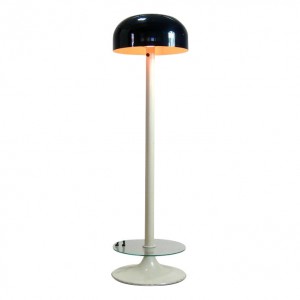
Sándor Borz-kováts: lamp from the Vargánya line, 1969
Sándor Kováts-Borz was a distinguished figure in Hungarian design. He studied at the College of Applied Arts between 1959 and 1964. During his studies, he already designed a number of remarkable objects, such as the disk chair (1962), a phone booth and a bus station (1963). After graduation, he started working at the design office of Csongrád County. He worked on the remodelling of the music schools in Szentes and Csongrád, as well as on several shops and supermarkets in Hódmezővásárhely. From 1966, he taught interiour design at the College of Applied Arts. He also designed various everyday items. His ingenious design talent manifested itself in his furniture designs, as well as in his drinking wells, trash cans, bird feeders and benches, designed for the Gardening Company of Budapest. He created several series of lamps, from which the most popular was the so called Vargánya lamp, distributed and produced by himself in his own workshop, supervised by his father. He went on a research trip to Finland in 1968. In 1969, his works were included at the Exhibition of Young Applied Artists. A year later, he participated at the interiour design exhibition in Ernst Museum. The Vargánya Lamp, along with a pipe framed furniture line were included in the Ten Expermients exhibition in 1972. This presentation, which he created with nine other artists, is considered the birth of Hungarian design.
Film
1969 and film
- Miklós Jancsó: Fényes szelek
(https://www.youtube.com/watch?v=goQez_uOD18)
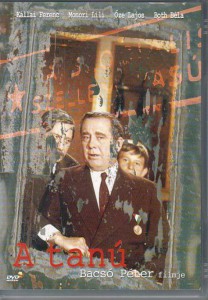
- Péter Bacsó: A tanú
(https://www.youtube.com/watch?v=bxLjNLyH8-s)
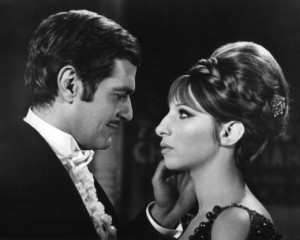
- William Wyler: Funny Girl
https://www.youtube.com/watch?v=IxanB1J5bw0
- Dennis Hopper : Easy Rider

Music
1969 and music
- Hungária:
(https://www.youtube.com/watch?v=tl6xYkRj8ng)
- Kex
(https://www.youtube.com/watch?v=99j_BsYX55k)

- Omega
(https://www.youtube.com/watch?v=zHBKDO6d-VA)
- Woodstock