Jasper Johns
Bio
Jasper Johns
(1930, Augusta / USA – )
Jasper Johns spent his early life in South Carolina, where, after the failure of his parents’ marriage, he moved around between his grandparents, mother and aunt. After three semesters at the University of South Carolina, he moved to New York City and studied briefly at an art school in 1949. Because of his drop-outs, he is considered a self-taught artist. In 1952 and 1953 he was stationed in Sendai, Japan, during the Korean War. In 1954, he returned to New York, where he met Robert Rauschenberg, his fellow artist and supposed lover. In 1958, gallery owner Leo Castelli discovered Johns while visiting Rauschenberg’s studio and he gave him his first solo show. It was here that Alfred Barr, the founding director of New York’s Museum of Modern Art, purchased four works from this show. After creating the Ale Cans, Johns moved back to the South for a couple of years and then in 1963, with his friend, John Cage he founded Foundation for Contemporary Performance Arts, now known as Foundation for Contemporary Arts in New York City. He became particularly well known for his use of the imagery of targets, flags, maps, and other instantly recognizable subjects. Johns currently lives in Connecticut and is 85 years of age.
Johns’ work focuses on how we see, how we perceive things, and on how perception relates to the language of painting. Although questions about the language of painting had already been asked by artists, especially by the cubists, Johns takes the cubist interest in language to another level. Some of the strategies we see him use to do this include pretend “ready-mades”; the use of naming things in a painting, but naming them inconsistently or incorrectly; the transformation of an object’s function; the painting which becomes an object; literally representing the meaning of a process; and questioning the idea of uniqueness and the reproducibility of objects.
Source:
- Grove Art Online
- Oxford Art Online
- Radford University Online
+
Jasper Johns’ Ale Cans
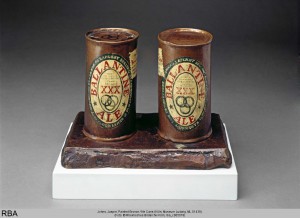 The ale cans were fabricated in a complex manner – Johns claimed that ‘parts of the sculpture were done by casting, parts by building up from scratch, parts by moulding, breaking, and then restoring. I was deliberately making it difficult to tell how it was made.’ Additionally, Johns cast each can and the base separately and as the autographic mark of the artist’s hand, he imprinted his thumb in the base, confirming that the work is handmade.
Painted Bronze was one in a series of sculptures that came to define Johns’ theories of reality; like the pop art that followed it, his experiments with context sought to reconstitute “ordinary” objects in such a way as to highlight the power of the perceptual over the physical world. In 1964 he explained, as fulsomely as he ever would, what it was he was trying to do: “I am concerned with a thing’s not being what it was, with its becoming something other than what it is, with any moment in which one identifies a thing precisely and with the slipping away of that moment.”
Source:
- Joan M. Marter, The Grove Encyclopaedia of American Art, Volume 1.
- The Art Story (http://www.theartstory.org/artist-johns-jasper-artworks.htm#pnt_4)
World News
1960 in the World
- 1960 is referred to as the Year of Africa because of the seventeen African nations (e.g. Somalia, Ivory Coast, Nigeria) that gained independence.
- John F. Kennedy wins the election over Nixon and becomes the 35th President of the United States.
- For the first time, the Archbishop of Canterbury visits the Pope.
- The population of the world is 3 billion.
- France tests its first atomic bomb in the Sahara Desert of Algeria.
- The United States launches the first weather satellite.
- The Great Chilean earthquake occurs causing the most powerful earthquake on record with a magnitude of 9.5 and a tsunami.
- Penguin Books is found not guilty of obscenity, in the case of D. H. Lawrence’s novel Lady Chatterley’s Lover.
- InBuenos Aires the fugitive Nazi criminal against humanity, Adolf Eichmann is captured in order that he can be taken to Israel and put on trial.
- Death of Albert Camus and Clark Gable.
Art Life
Art events from 1960
- The artist Yves Klein and the art critic Pierre Restany establish the group Nouveaux Réalistes at a group exhibition in Milano. Members of the group wanted to return to reality instead of the poetic nature of abstract painting in the era, while trying to avoid the trap of figurativity. Art history oftern refers to Nouveau Réalisme as the French version of American pop art. The group worked together until 1970.
- Alberto Korda creates his iconic image of Che Guevara, titled „Guerrillero Heroico”.
- Death of István Szőnyi and János Mattis Teutsch.
Design, Lifestyle
Pop Tops…
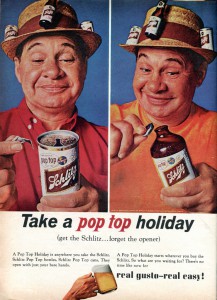 The beer brewer company and national USA giant Schlitz Beer refers in this ad to the phenomenon that occurred at the beginning of the 1960s, i.e. to the transition to the pull-tab beer (introduced between 1962–64) to replace the flat punch-top can. The new pop or zip top was not without problems, however. The first design had lots of sharp edges on both the tab and the opening, and there were complaints from customers about cut fingers, lips and even noses!
John Updike even wrote a small essay in 1964 mourning the old beer can style in The New Yorker.
Source: Brookston Beer Bulletin online, Rusty Cans online
Film
1960 and film
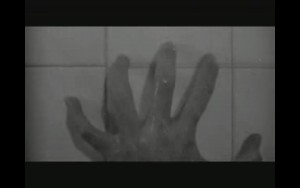
- Alfred Hitchcock: Psycho
https://www.youtube.com/watch?v=8VP5jEAP3K4
- Federico Fellini: La Dolce Vita
https://www.youtube.com/watch?v=04P1dCLvc_0

- Jean-Luc Godard: A bout de souffle
https://www.youtube.com/watch?v=ib1OMh5fTkQ

Music
1960 and music
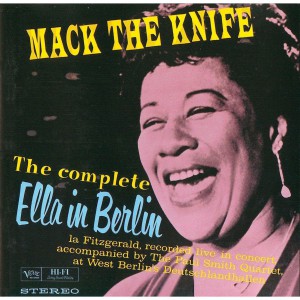
- Ella in Berlin: Mack the Knife– Ella Fitzgerald
https://www.youtube.com/watch?v=6vXAtVbZbkI
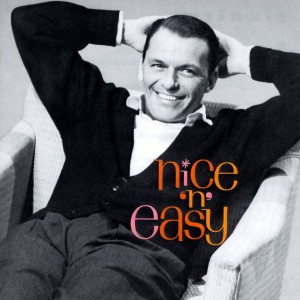
- Nice ‘n’ Easy– Frank Sinatra
https://www.youtube.com/watch?v=e2dDijEJC_g
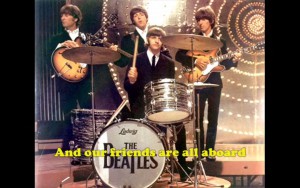
- The Beatles formed