Pinczehelyi Sándor
Bio
Sándor Pincehelyi
(1946, Szigetvár / HU – )
Pincehelyi’s artistic career is extremely complex and manifold, as his work as an artist ranges from painting to graphic art to poster design. He is a member of the avant-garde group known as the Pécsi Műhely (Pécs Workshop). In 1988, together with Imre Bukta and Géza Samu, he exhibited at the Hungarian Pavilion at the 43rd Venice Biennale.
He applied the silkscreen print technique in several of his works connected with pop art, and also used “self-evident, popular sets of symbols obvious to everyone, accepting them as a visual language that really existed, while on the other hand he also represented a historical, European, cultural-sociologist perspective.” (Loránd Hegyi)
His oeuvre can be divided into three main periods, which also mark shifts in attitudes. The first period (1972-1980) is his Conceptual and land art period. The second period (1980-1992) is characterized by historical themes and the strengthening of the personal side. In the third period, one discerns retrospective, historical-like elements.
+
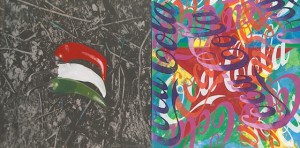
Pinczehelyi Sándor: PFZ paprika – small sign, 1982-88, Janus Pannonius Museum, Pécs
- Among Hungarian artists, Sándor Pinczehelyi was the first to use the Coca-Cola motif.
- The sickle and hammer, the cobblestone, the star, the paprika, the various animals (sheep, swine, goose), the national colours: red-white-green (the abbreviation formed by using only the first letters of the Hungarian words: PFZ) all appear in Pincehelyi’s art. In the 1980s, fish, Coca-Cola cans, and hay were added to the list of emblems.
- Lóránd Hegyi summarizes Pinczehelyi’s art in the following passage: “He politicizes not by creating visual representations of political subject matter in some kind of narrative or allegorical form. Rather, he makes the language, the system of visual symbols ambivalent, altering – or rather confusing – iconography’s inner system of meanings. […] Irony in his case is a deeper and more complex phenomenon: it is the formulation of historical ambiguity.”
- In connection with Star, Cobblestone Lóránd Hegyi wrote the following:
Pinczehelyi “discovered the cobblestone for himself in 1972, and it became one of the essential iconographic elements in his art. The five-pointed star mobilises concrete geographical, historical meanings. It palpably conjures political and historical associations. The sickle, the hammer and the cobblestone can be interpreted in the same manner. The cobblestone refers to revolutionary practice, to the construction of barricades, to wearisome physical labour, to the “classic” working proletariat. The story of the five-pointed star follows a reverse path: it went from being a symbol to being an object and not from a tool to a symbol. In the cobblestone-star series Pinczehelyi shows not just the well-known dialectic of processual art, namely the moment of qualitative change manifested with the documentation of quantitative changes, but also includes a content layer in this dialectics: from a disorderly heap a – politically comprehendible – symbolic form evolves; and the two different layers of symbolic meaning, the cobblestone (as the weapon of the proletariat) and the five-pointed star, are connected.”
World News
1973 in the World
- The first oil crisis: The first oil crisis started on the 17th October 1973, after the Organization of the Petroleum Exporting Countries (OPEAC) gave out a statement about decreasing oil production and declared oil embargo against countries in support of Israel in the Yom Kippur War. As a result of the crisis, developed countries dependent on natural resources saw a spike in inflation, leading to severe recession. Developed countries, including Hungary, accumulated dept. The crisis motivated these countries to free themselves from the grip of oil and seek out alternative energy sources, such as nuclear power or renewable energy.
- The Vietnam war ends in a treaty, American troops are gradually removed from the country. Bombing of Cambodia ends, putting and end to the American presence in South East Asia.
- The World Trade Center in New York is the world’s highest building.
- Augusto Pinochet takes over power in Chile.
- Postcodes are introduced in Hungary.
- Foundation of the Hortobágy National Park, the first of its kind in Hungary.
- Magvető Publishers rejects the novel Fatelessness by Imre Kertész.
- Death of Bruce Lee and J. R. R. Tolkien.
Art Life
Art Events from 1973
- „Fluxshoe” exhibition in the Museum of Modern Art, Oxford, curated by David Mayor. Hungarian participants: Endre Tót, Tibor Gáyor, Dóra Maurer. (Artpool)
- ‘Flux-concert’ performance of the Budapest University Theatre Group, which was eventually banned. Some of the participants: Henning Christiansen, George Brecht, Juan Hidalgo, George Maciunas, Ben Vautier, Yoko Ono. It would have been moderated by László Beke and Tamás Szentjóby, contributors would have been: Gyula Pauer, Zsuzsa Szücs and Nica Taxidu. (Artpool)
- 8th Paris Biennial, Hungarian contributors: György Jovánovics, Péter Legéndy, Gyula Pauer, Tamás Szentjóby (Artpool)
- Death of Pablo Picasso.
Design, Lifestyle
 The historical Hofherr and Schrantz Machine Factory in Kispest, Hungary was nationalised in 1948. From the 21st November 1951, it was called the Red Star Tractor Factory. Instead of a wide range of agricultural machines, the remodelled factory only produced a certain type of tractors introduced between the two world wars. From 1960, the Experimental Workshop saw an accelerated development, therefore the prototypes went quickly into mass production. This factory and workshop created the modern tractors of the country, among them the famous Dutra tractors.
The state owned company was merged with the Rába Hungarian Waggon and Machine Factory (in Győr) on the 30th June 1973. Production of Dutra tractors was stopped.
Film
1973 and film
- Wolfgang Reitherman: Robin Hood
https://www.youtube.com/watch?v=awONp__GGvU

- Norman Jewison: Jesus Christ Superstar
https://www.youtube.com/watch?v=jkje4FiH9Qc

- Marcell Jankovics: János Vitéz
https://www.youtube.com/watch?v=v6c-v2iu2fE

Music
1973 and music
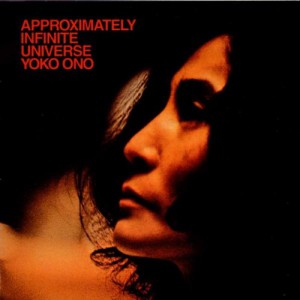
- Yoko Ono: Approximately Infinite Universe
https://www.youtube.com/watch?v=Q1ciZehlsvk
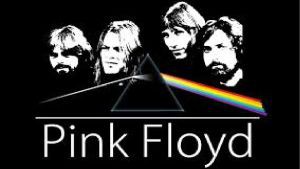
- Pink Floyd: The Dark Side of the Moon
https://www.youtube.com/watch?v=DLOth-BuCNY
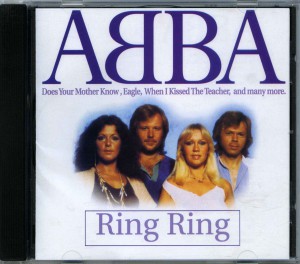
- ABBA: Ring Ring
https://www.youtube.com/watch?v=TL0EoXdpOqg