Richard Hamilton
Bio
Richard Hamilton
(1922, London / UK – 2011, North End / UK)
Richard Hamilton began his studies in painting at the Royal Academy of Arts in 1938. In 1952, he founded the Independent Group together with Eduardo Paolozzi and Lawrence Alloway. They held their meetings at the Institute of Contemporary Art in London; their main objective was the study of popular depiction. For a brief period Hamilton taught and thereby directly influenced the “second generation” of pop artists (Robyn Denny, Peter Blake, Roger Coleman). In 1956 Hamilton participated in the exhibition This is Tomorrow, which was organized at the Whitechapel Gallery in London. It was for this occasion that he made Just What is it That Makes Today’s Homes So Different, So Appealing?, one of his best known collages and one of the earliest examples of pop art (it was used as the cover of the exhibition catalogue). In this work Hamilton inserted elements of everyday life which were simultaneously economic status symbols. Following his trip to New York in 1963, he began placing photographs in his paintings. For his work entitled Landscape, which was made in 1965, he used a black-and-white landscape which he altered by colouring some of the elements and erasing others, resulting in a poster-like image. In the 1980s, he began examining the possibilities offered by digital technologies, as well as their effects on perception. In 1994, the Tate Gallery organized a retrospective exhibition of his work, and in 2003 a similarly retrospective exhibition was held by the Ludwig Museum in Cologne.
Sources:
- Tilman Osterwold: Pop Art. Cologne, Taschen, 2003
- Ingo F. Walther (ed.): Art of the 20th Century, Cologne-New York, Taschen, 2000
- Kalus Honnef: Pop Art, Cologne, Taschen, 2003
- Tamás Aknai: Egyetemes művészettörténet 1945-1980. [The History of World Art, 1945-1980] Budapest-Pécs, Dialóg Campus Kiadó, 2001
- Lisa Philips: The American Century: Art and Culture. New York, Whitney Museum of American Art, 1999
- http://www.hamilton-richard.com/ (last accessed: 2015-07-25)
- http://www.theguardian.com/artanddesign/2011/sep/13/richard-hamilton-obituary (last accessed: 2015-07-25)
+
 In 1955, Hamilton conceived the exhibitionMan, Machine and Motion. He collected around two hundred photographs and reproductions of drawings showing vehicles and equipment that ‘extend the powers of the human body’, enabling aquatic, terrestrial, aerial and interplanetary movement. These items were arranged in a modular steel grid with clips of Hamilton’s design on horizontal and vertical planes so that a viewer could walk through and see images below and above them. The exhibition was held first at the Hatton Gallery in Newcastle and then at the Institute of Contemporary Arts, London.
Some art historians contend that pop art began with Hamilton’s collage Just What is it That Makes Today’s Homes So Different, So Appealing? (because of the inscription POP on a tennis racket in the picture).
Hamilton designed the cover of the Beatles’ record “The Beatles”, also referred to as the White Album because with the exception of the band’s name the entire cover is white. The “white album” came on the market a year after Peter Blake’s cover known as Pepper’s Lonely Hearts Club Band, a curio of pop art.
World News
1965 in the world
- At the New York World fair the second time capsule named Westinghouse is buried. According to the plan, it will be opened in 6939
- The United States launches the world’s first commercial communications satellite, named Early Bird. Alexey Leonov performs the first extravehicular activity in space, exiting from the spacecraft Voskhod-2. The Americans didn’t lag behind: Edward White floated around the two-person Gemini-4 using a flare pistol.
- The Central Committee of the Romanian Workers’ Party elects Nicolae Ceaușescu as the successor of the first party secretary, Gheorghe Gheorghiu-Dej.
- The building of the National Theatre on Blaha Lujza square in Budapest is demolished. The authorities explain this decision with references to “city planning issues.” Soon afterwards, on the 20th anniversary of the liberation of Hungary from German occupation, a statue of Lenin is unveiled on Dózsa György Avenue.
- The United States increases its military force in Vietnam while in the same year 35 thousand people demonstrate against the war in Washington alone.
- The construction of the first block housing project built out of elements manufactured by house factories commences (Szakasits Árpád Road 15-25.)
- Winston Churchill and T. S. Eliot die.
- The popular Tom & Jerry cartoon is taken over by television.
- British pop-rock flourishes in America as well. The Beatles’ song Yesterday becomes a global success and the Rolling Stones’ hit Satisfaction comes out.
- Pepsi Inc., later to become the great competitor to the Coca Cola Company, is founded.
Art Life
Events in the art world in 1965
- Kenneth E. Tyler (1931 – ), born in America to a Romanian father and a Hungarian mother, establishes his studio Gemini in Los Angeles. Tyler had an enormous role in the revival and development of post-war limited edition printmaking techniques. Renowned figures of pop art, such as Roy Lichtenstein, Robert Rauschenberg, Jasper Johns and David Hockney among others, often frequented his studio.
- Le Corbusier and Károly Lyka die.
- In the 1960s, various performance events were of great importance. Allen Kaprow made the following claims: The various performances – which abolished the walls between art and life, between the various genres and branches of art – were also shown at festivals. One such interdisciplinary event was the “New York Theater Rally” in 1965, during which twenty-two performances took place, including Oldenburg’s happening entitled Washes.
- Due to economic growth in Italy an economic “miracle” took place in the country, resulting in the percentage of households owning a television to jump from 12% to 49%, a change which would play a key role in the spread of pop culture.
Design, Lifestyle

Ron Herron, Walking City, 1965
In the 1960s, the critic of capitalism and the modern world manifested itself in grande scale utopies, which played a vital role in architecture, as well.
The group Archigram (from the words Architecture and Telegram) was established in London in 1961, along with the magazine under the same name, popularising their futuristic designs and visions. The avant-garde architect group was represented by Warren Chalk, Peter Cook, Dennis Crompton, David Greene, Ron Herron and Michael Webb.
They dreamt of a more humane architecture, emphasising stustainable arhictecture, instead of developments that ruined the environment. Their highest ideal was the kind of architecture that didn’t effect nature in any way.
At the same time, Archigram broke up with reality and turned towards comics. By designing cities for graphic novels, they rebelled against the mainstream architectural practice.
The architectural theory of Archigram mainly manifested itself in the works of two initiatives in Florence, the Archizoom Associati and the Superstudio. The two radical architectural groups were established in 1966.

Archizoom, ”Wind City” project, 1969

Verner Panton, Room installation for Bayer at the Visiona II exhibition in Cologne, 1970 (Fantasy Landscape). The Danish designer created futuristic room installations for Bayer for the Visiona exhibitions in 1968 and 1970, using pure block colours.
Film
1965 and film
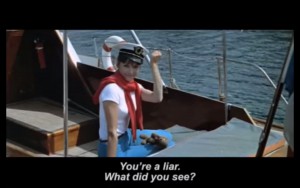
- Jean-Luc Godard: Pierrot le fou
https://www.youtube.com/watch?v=ycg2yb3qiUo
- George Cukor: My Fair Lady
https://www.youtube.com/watch?v=ZimaKCuS7xg

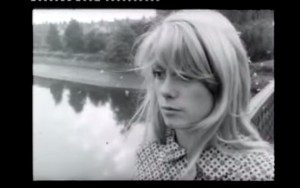
- Roman Polanski: Repulsion
https://www.youtube.com/watch?v=iO0niGPR5S4
Music
1965 and music
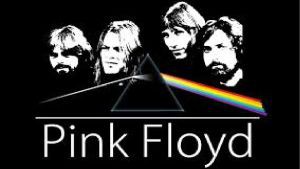
- Pink Floyd:
https://www.youtube.com/watch?v=P7YMI39sObY&list=PLQsutykTyk-s9oibQ9im5m1HIWQTLxiS0
- The Beatles: Rubber Soul
https://www.youtube.com/watch?v=trrepsAwcTg&list=PLVyehhUaGFdWaI-j3-kZC9lPxgrauch3_

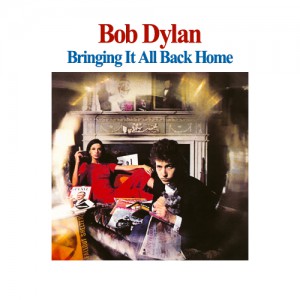
- Bob Dylan: Bringing it all back home
https://www.youtube.com/watch?v=zP4XP8CaX7k&list=PLGbb9KO9XC_MSFio_pXZncVAMHLWUkpNh
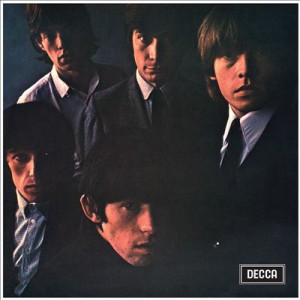
- The Rolling Stones: The Rolling Stones no. 2
https://www.youtube.com/watch?v=3KV7sfinAao